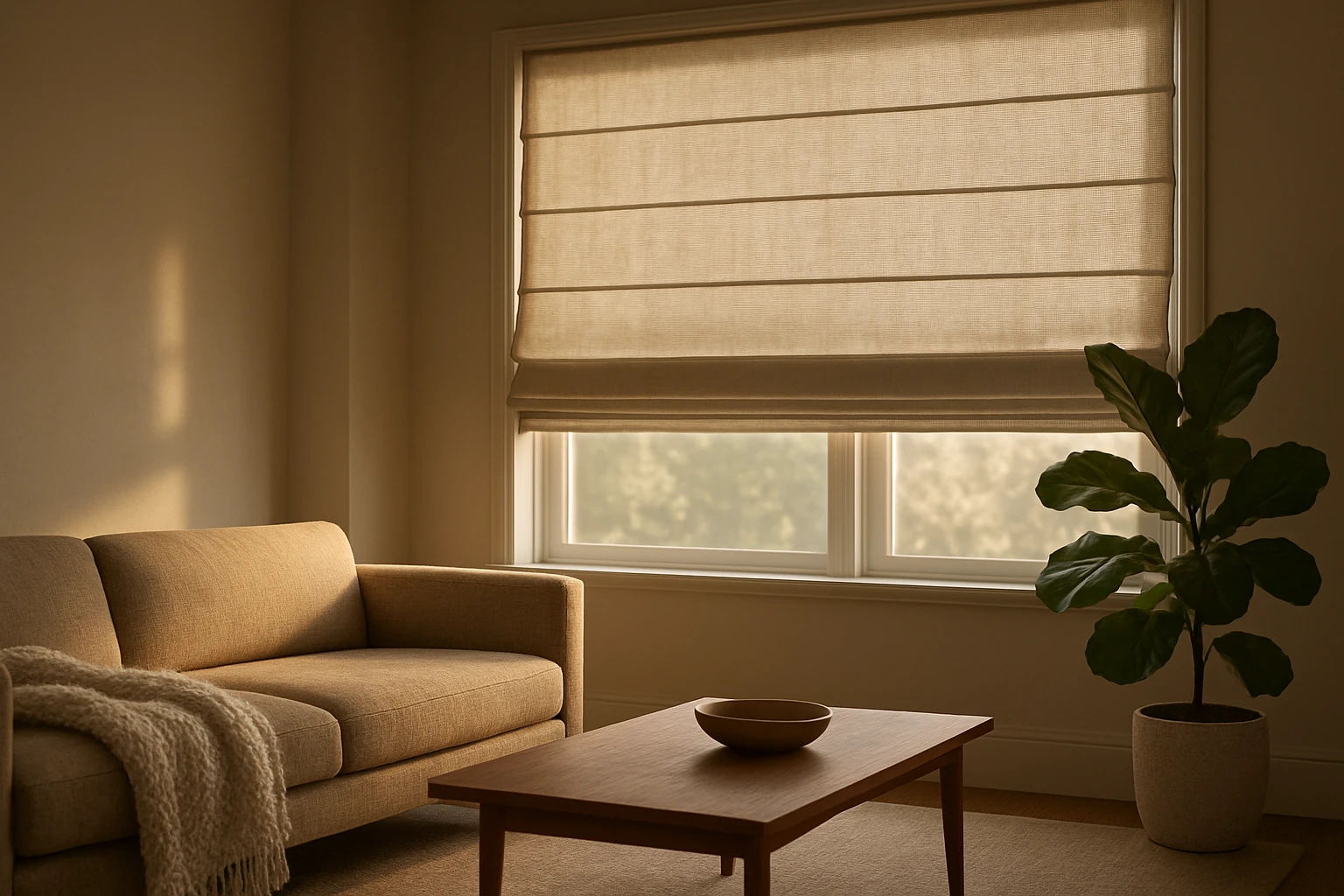
Blackout Roman blinds are fabric Roman shades made with a dense liner or with several fabric layers that block most visible light and reduce heat transfer. They give strong room darkening for bedrooms and media rooms, and when fitted correctly they can cut heat loss from drafty windows.

Key Statistics
- Blackout fabrics commonly block 95 to 99 percent of visible light.
- Properly fitted blackout blinds can reduce heat loss by about 10 to 25 percent in a single room.
- Typical retail cost ranges from $80 for basic sizes to $400 for custom, lined Roman blinds.
What Blackout Roman Blinds Are
Blackout Roman blinds fold into neat horizontal pleats when raised and lie smooth when lowered. They look like regular Roman shades but use heavier weaves or a special backing to keep rooms dark. The result is a soft fabric window treatment that closes out light without the bulk of heavy curtains.

Roman Blinds sells and fits many styles and can advise on fabrics and measurements. See Roman Blinds for options and local service.
How Blackout Fabric Works
Blackout fabric either has a very dense weave or a bonded blackout backing that stops light from passing through. Some blinds use three layers: the face fabric, a blackout foam or fabric core, and an inner lining that hides the backing and gives a neat finish.

Key points about materials and performance:
- Solid blackout backings block more light than tightly woven fabrics alone.
- Foam backings add some thermal insulation, which helps retain heat.
- Small gaps at the sides or under the blind can let light in unless you use side channels or overlap the frame.
Blackout Levels and Terms
Not all products labeled blackout perform the same way. Typical labels you will see are:
- Room Darkening: reduces most light but may allow a little glow.
- Full Blackout: blocks 95 to 99 percent of visible light when fitted closely to the frame.
- Triple-Weave or Foam-Backed: commonly used for reliable blackout results.
Choosing Fabric and Liner
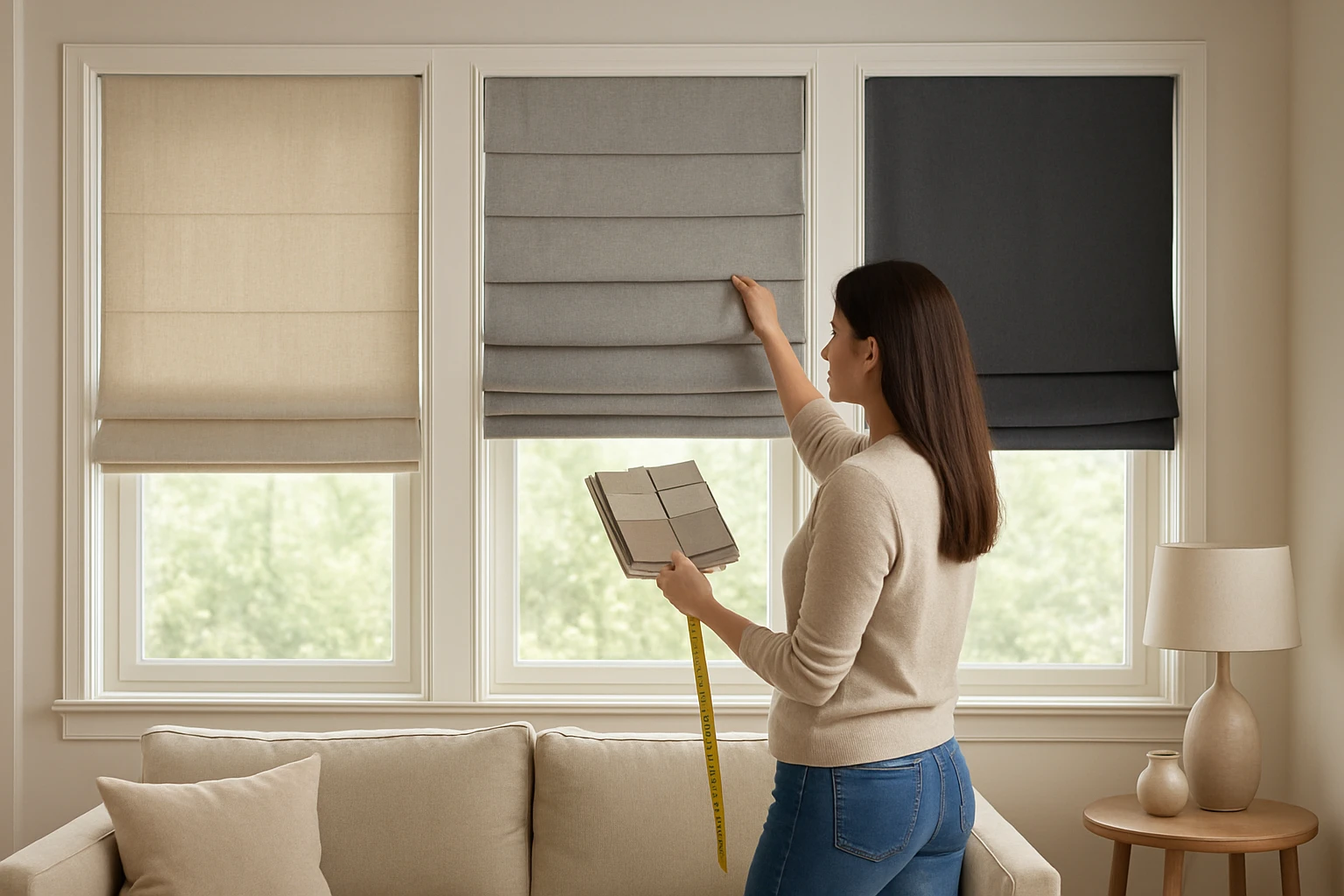
Pick a fabric and liner based on the room, the view, and how dark you need the space to be. Bedrooms and home cinemas usually use heavier, bonded blackout fabrics. Living rooms often use room-darkening options that balance light control and style.

Compare fabrics on these features:
- Light block level: full blackout for sleeping or cinema rooms, room-darkening for living areas.
- Thermal value: thicker backings give more insulation.
- Appearance: pick a face fabric that matches the room; linings are hidden but affect drape.
- Cleanability: many blackout liners are wipeable or can be dry-cleaned.
Fabric Checklist:
- Decorative face fabric that matches room style
- Blackout or thermal backing for full darkness
- Liner that hides backing and improves finish
Common Mistake to Avoid:
Not checking how the blind fits the window frame. Even the best blackout fabric will let light in around the edges unless you plan for overlap, side channels, or a tight recess fit.
Measuring for Roman Blinds
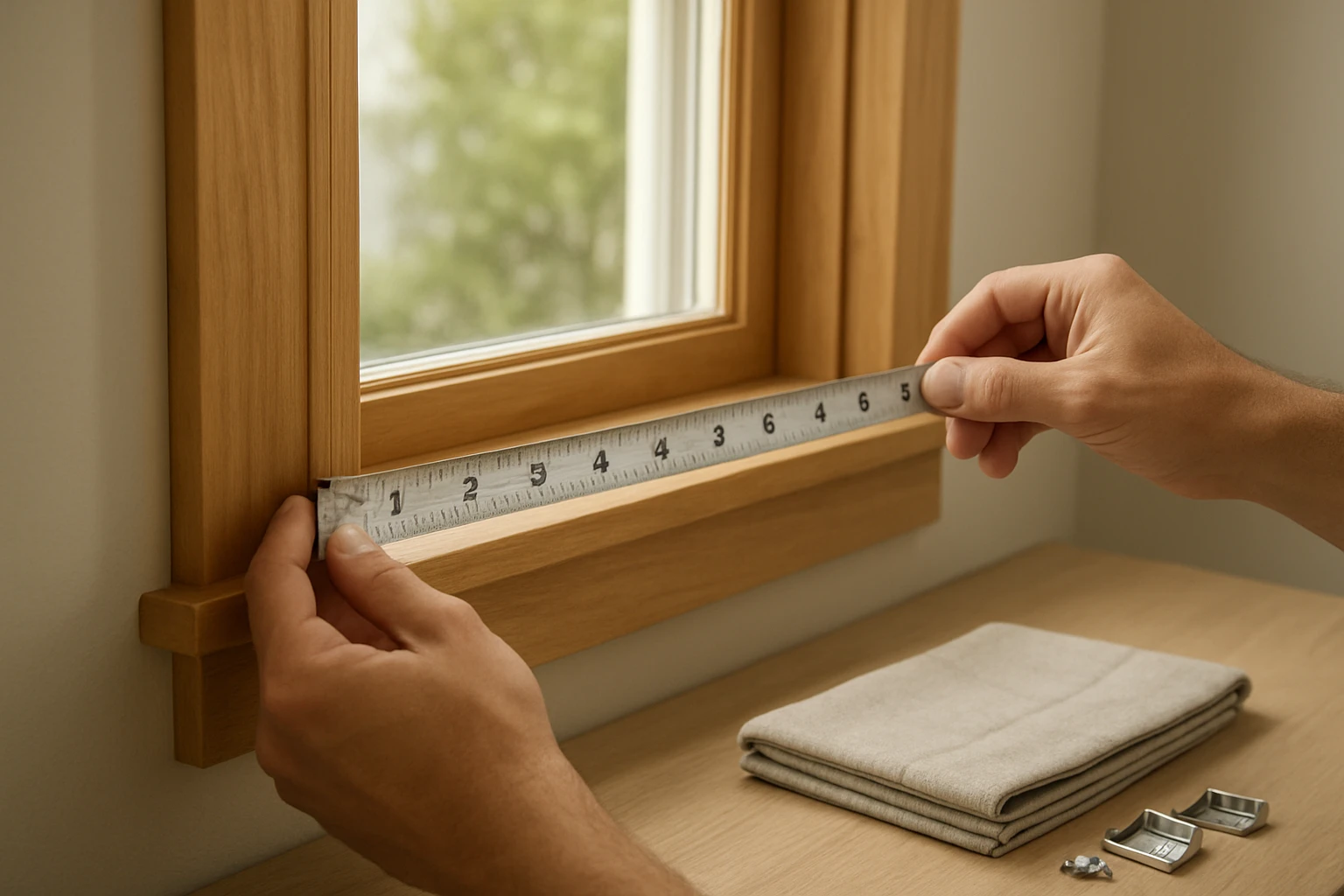
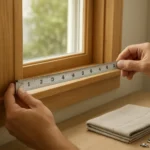
Accurate measurements make the difference between a near-blackout room and one with bright edges. Measure both the recess (inside the window frame) and the area you want to cover. Record window height, width, and reveal depth.

Step by Step Measuring
Measuring small windows and large floor-to-ceiling windows uses the same method but with care and attention. Follow these steps and write each number down.

What to Measure:
- Width across three points: top, middle, bottom.
- Height across three points: left, center, right.
- Depth of the window recess to check clearance for brackets.
Measuring Tips:
- For a recess fit, use the smallest width measurement and subtract 5 mm for clearance only if the installer advises it.
- For exact blackout, order the blind to sit outside the frame with 25 to 40 mm overlap each side and 50 mm overlap at the bottom when practical.
Installation and Maintenance
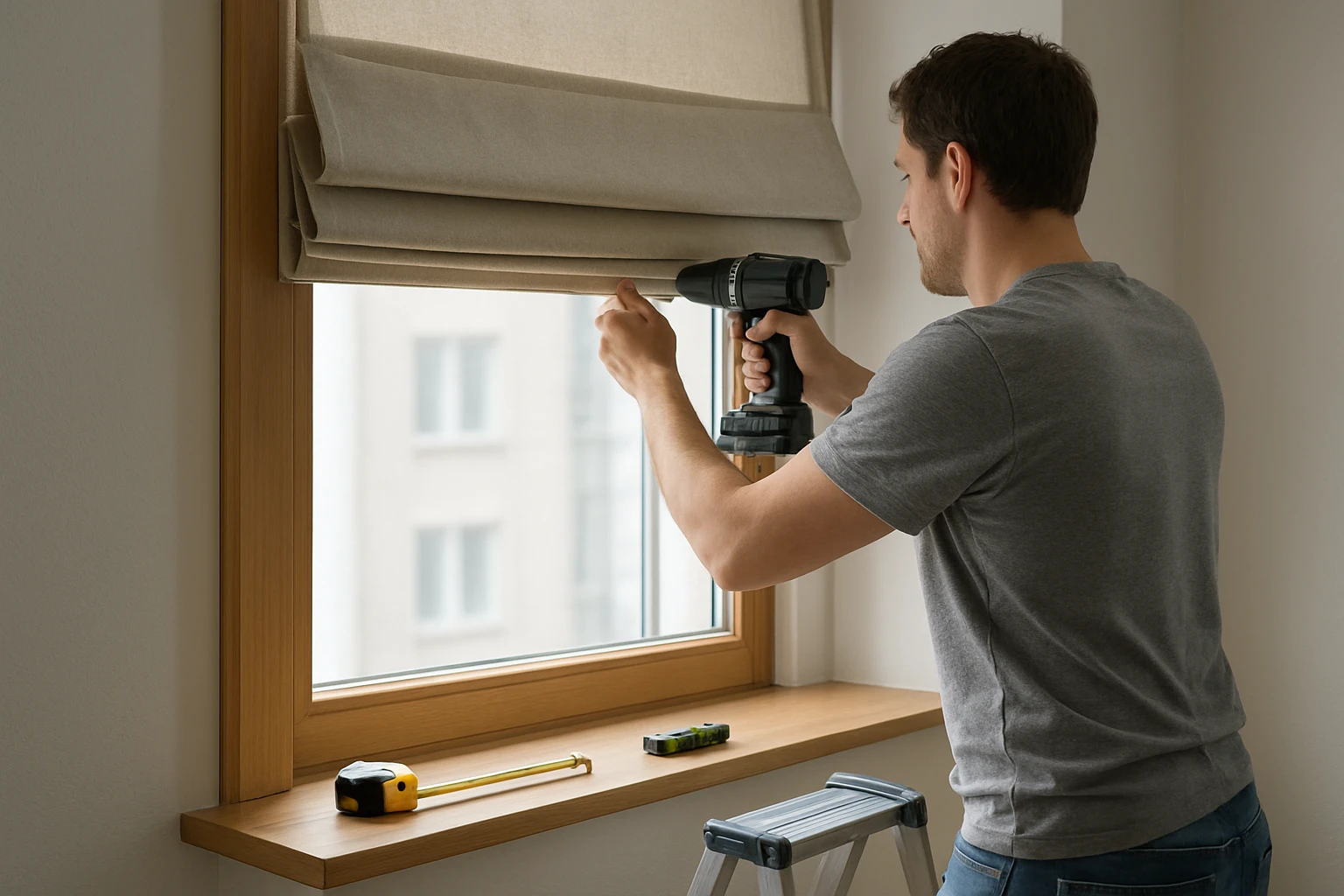
A correct installation keeps the fabric close to the frame and avoids light gaps. Many people fit Roman blinds themselves, but custom fittings or side channels make a big difference for full blackout performance.

Step by Step Installation
Installation is a multi-step process that benefits from clear checks at each stage. If you are not confident with tools, hire a professional fitter.

Tool Checklist:
- Power drill and appropriate bits
- Spirit level
- Tape measure and pencil
- Screwdriver and step ladder
Maintenance Routine:
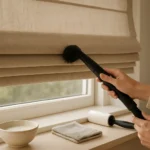
- Dust monthly with a soft brush or vacuum head on low.
- Spot clean stains with a damp cloth and mild detergent following fabric care instructions.
- Have heavy or foam-backed blinds professionally cleaned if the manufacturer recommends dry clean only.
Energy Savings and Cost
Blackout Roman blinds can lower heating costs and help keep rooms cooler in summer by reducing heat flow through the window. Exact savings depend on window size, glazing type, and how well the blind fits.

Typical cost ranges and practical lead times are shown below.
| Product Type | Typical Cost Range | Average Lead Time |
|---|---|---|
| Off-the-shelf blackout Roman blind | 80 to 150 | Same day to 1 week |
| Made-to-measure standard fabric | 150 to 300 | 2 to 4 weeks |
| Custom lined or layered Roman blind | 250 to 500+ | 3 to 6 weeks |
Practical energy and light performance data:
- Light blocking: 95 to 99 percent for full blackout liners.
- Heat reduction: 10 to 25 percent lower heat loss in a single room with good fit.
- Return on investment: homeowners often see lower heating bills within a season, especially on single-pane windows.
Comparison Table: Blackout Roman Blinds Versus Other Options
| Feature | Blackout Roman Blinds | Roller Blackout Blinds | Heavy Curtains |
|---|---|---|---|
| Light Block Level | 95 to 99% with good fit | 95 to 99% with side channels | 90 to 99% depending on overlap |
| Thermal Performance | Good with foam backing | Good with thermal backing | Very good with interlining |
| Style Options | Many fabrics and folds | Clean, modern look | Wide range of fabrics and fullness |
| Cost Range | Mid to high | Low to mid | Mid to high |
| Fit Complexity | Moderate to high for best blackout | Low to moderate | Low to moderate |
Where to Buy and Custom Options
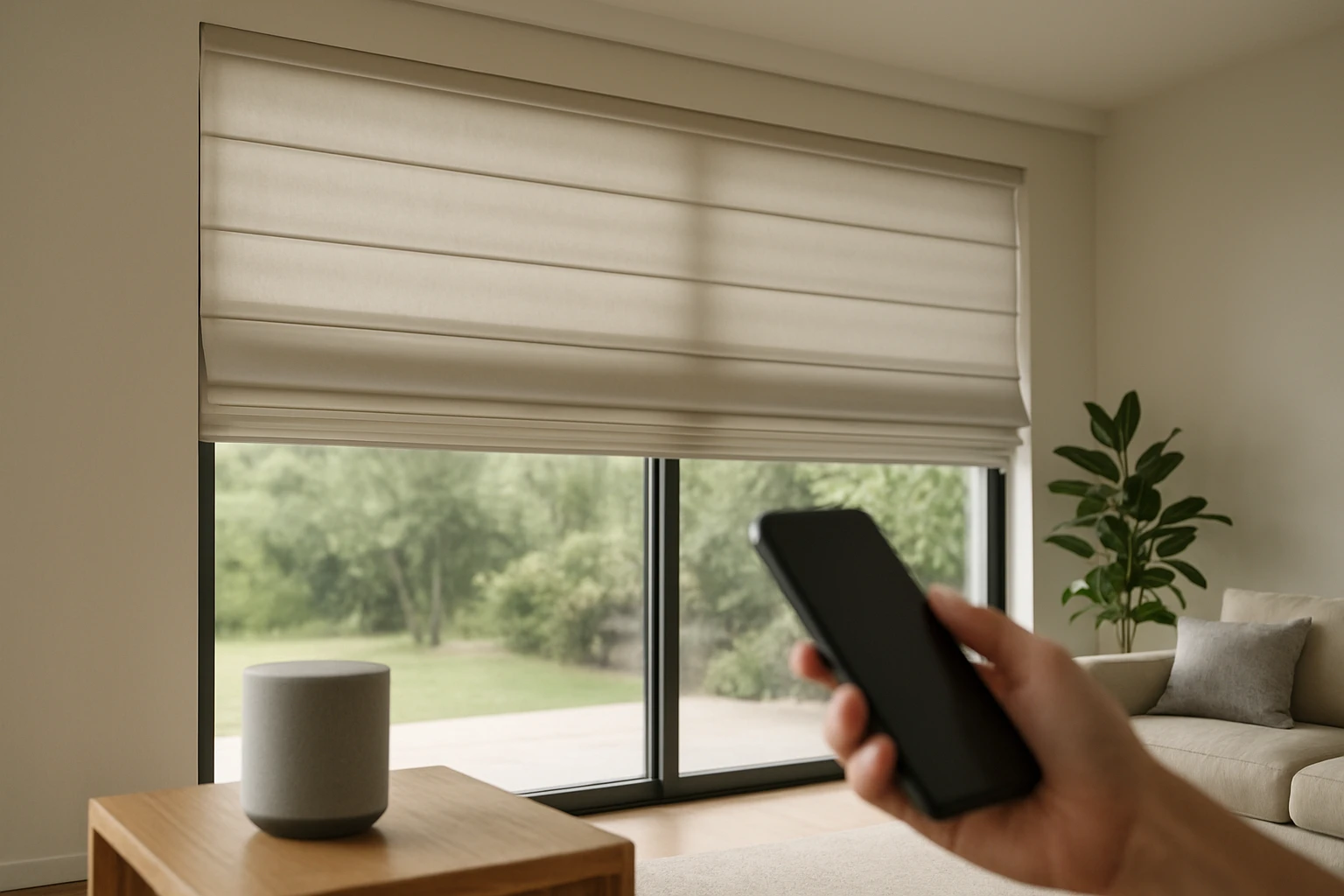
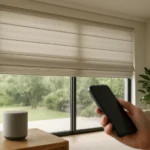
You can buy blackout Roman blinds from local showrooms, specialist stores, or online made-to-measure services. Custom options include cordless controls, motorized systems, and side channels for true blackout performance.

Buying tips:
- Ask for sample swatches to see the real blackout effect in your room.
- Check lead times for custom linings and motorized systems.
- Confirm return and fitting policies before you buy, and have final measurements taken by the installer if possible.
Common Mistakes and How to Avoid Them
Small errors in planning and fitting cause the biggest problems. Here are common mistakes and how to avoid them.
- Mistake: Ordering recess size without accounting for clearance. Fix: Measure recess depth first and ask the fitter how much clearance they need.
- Mistake: Skipping side channels for a bedroom. Fix: Use side channels or order outside-mounted blinds with enough overlap to stop edge light.
- Mistake: Choosing an unlined decorative fabric. Fix: Use a bonded blackout lining when you need full darkness.
Final Buying Checklist
Before you place an order, tick these items so the finished blind works as you expect.
- Measurement double-checked in three places for width and height.
- Fabric sample approved under room lighting conditions.
- Decision on recess versus outside fit and required overlaps.
- Choice of control type: cord, cordless, or motorized.
- Clarified lead time, warranty, and cleaning instructions.
Frequently Asked Questions
Do Blackout Roman Blinds Block All Light?
They block most visible light when they have a full blackout backing and a good fit. Expect 95 to 99 percent light reduction, but small gaps at the sides or bottom can let light in unless you add overlap or side channels.
Can Blackout Roman Blinds Help Reduce Heating Bills?
Yes. When fitted closely, blackout and thermal-backed blinds can reduce heat loss through windows by about 10 to 25 percent in a single room, which can lower heating costs over time.
Are Blackout Roman Blinds Hard to Clean?
Maintenance is usually simple: regular dusting and spot cleaning. Some liners need professional or dry cleaning, so check the care label before cleaning and follow the maker’s instructions.
Should I Get Inside or Outside Mount for Blackout Roman Blinds?
Outside mounts with 25 to 40 mm overlap each side and extra at the bottom give the best darkness. Inside mounts are neater but need good recess depth and very accurate measuring to avoid light gaps.
Can I Motorize Blackout Roman Blinds?
Yes. Motorization is common and works well for large windows or hard-to-reach areas. Confirm power options and safety features before ordering.
How Long Do Blackout Linings Last?
With normal use they last many years. Longevity depends on fabric quality, exposure to direct sun, and maintenance. High-quality bonded linings are more durable than cheaply bonded alternatives.