Clean fabric Roman shades by starting with dry dusting, then treat stains with a mild detergent and blot. Only soak or machine wash if the fabric and lining allow it. Test a hidden corner first, use cool water and gentle handling, and air dry flat or hung so the folds stay straight.
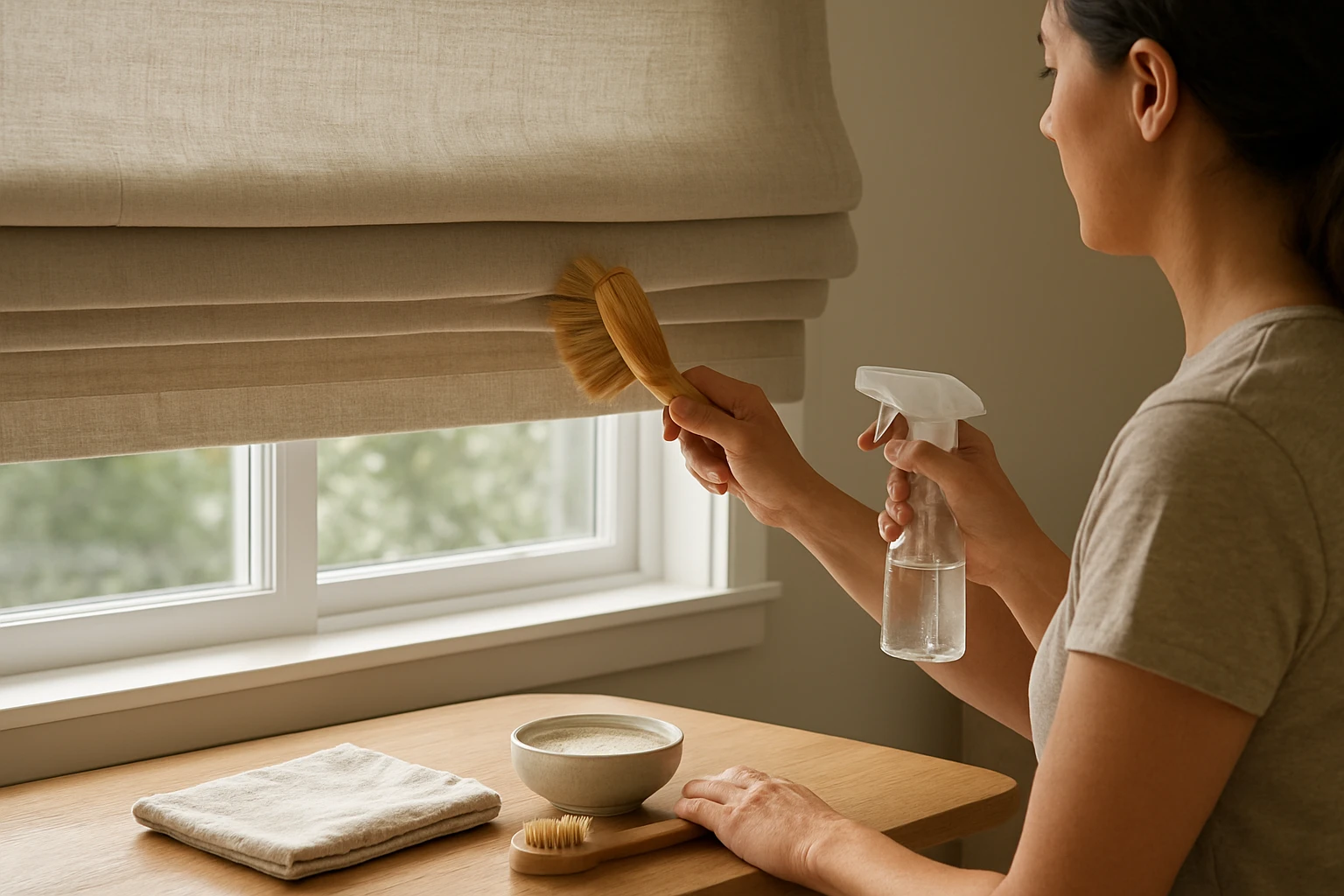
Cleaning Roman shades is a task many homeowners avoid because the folds and lining look hard to handle. Roman Blinds suggests an easy order: remove loose dust, treat stains gently, and only hand wash or machine wash when the care label allows. This article gives safe methods, shows what to test first, and points out common mistakes so you can clean once and keep the shade looking good.
When to Clean Roman Shades
Roman shades need cleaning when they look dull, smell musty, have visible dust, or show a stain. A schedule that works for many homes is light dusting every one to two weeks and a deeper clean every six to twelve months, depending on sunlight, cooking, and pets. If you see dark lines along folds or oil from hands, clean those spots right away to avoid permanent marks.

How often you clean depends on fabric type and location. Shades in kitchens and nurseries often need cleaning every three to six months. Living room shades may only need a deep clean once a year. A common mistake is waiting until a stain sets, which can make the fabric impossible to restore without a pro.
Tools and Products You Need
Gather the right tools before you start to save time and lower the risk to the fabric. Use mild cleaners and soft tools. Harsh brushes and strong chemicals can cause damage.
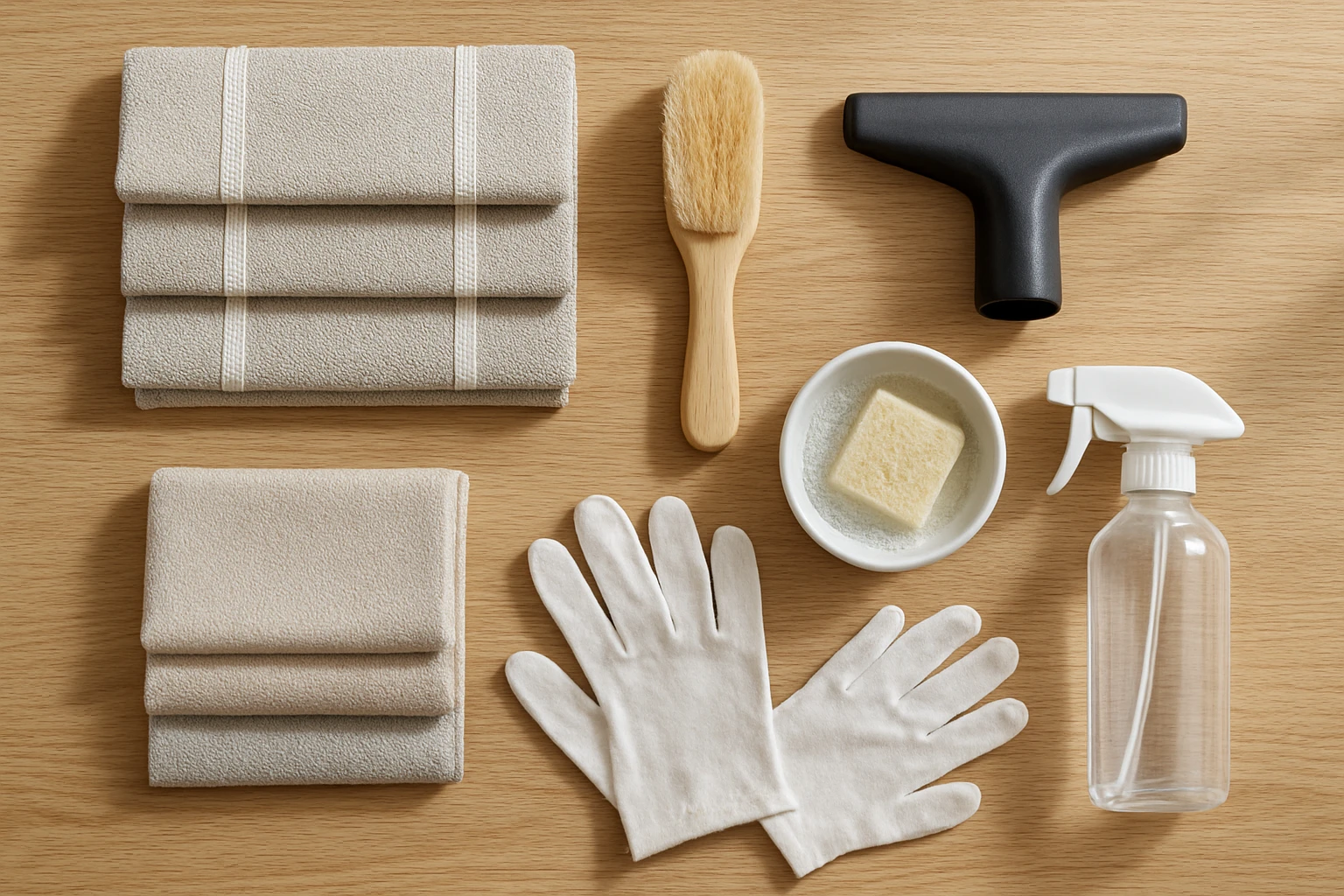
Tool Checklist:
Soft Vacuum Attachment:
Use a low-suction setting and a brush or upholstery nozzle. This removes loose dust without stressing seams.
Microfiber Cloths:
White cloths help avoid dye transfer and show dirt so you can see what you remove.
Soft Brush:
A soft horsehair or natural bristle brush moves dust from folds without roughing the fabric.
Mild Detergent:
Choose a pH-neutral detergent or a gentle wool soap and dilute it in cool water. Avoid bleach or strong stain removers unless the care label allows them.
Small Spray Bottle and Bowl:
Use these for spot cleaning so you can control how much moisture touches the fabric.
White Cotton Gloves (Optional):
Wear gloves to handle light fabrics without transferring oils from your hands.
How to Identify Fabric and Lining
Different fabrics react differently to water and cleaning. Before any wet cleaning, look for the care label. If there is no label, test a hidden area to check colorfastness and shrinkage.
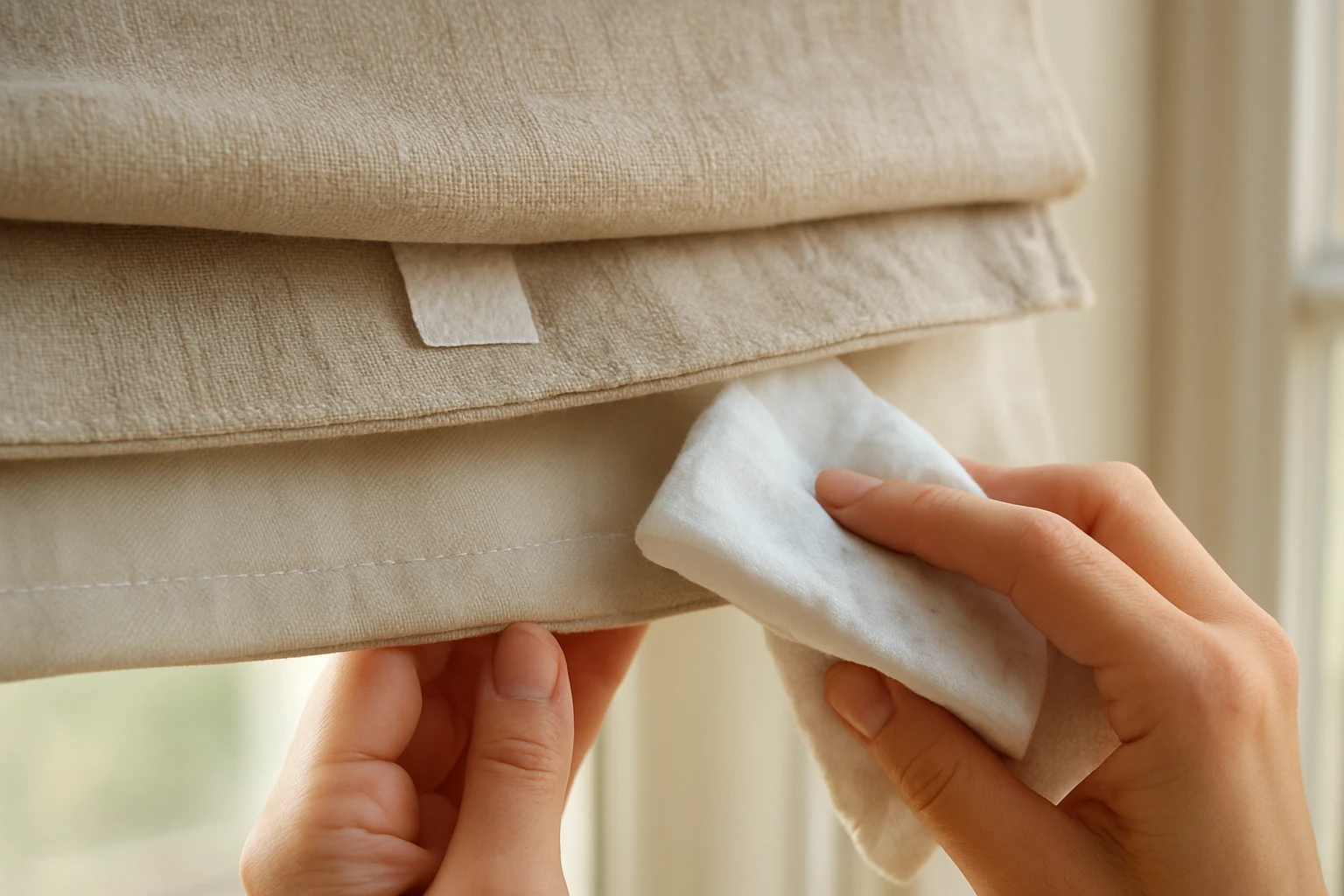
A basic test works well. Dampen a white cloth with cool water and blot the inside fold or the underside of the hem. Wait ten minutes. If dye transfers to the cloth, the fabric is not colorfast and wet cleaning is risky. Look at the lining too. A cotton lining can shrink or behave differently from polyester and may separate from the face fabric if soaked.
We have found linen and cotton blends are the most common for Roman shades and they need gentler handling than many synthetic blends. See Best Fabric for Roman Blinds: 6 Options for Different Requirements for notes on each fabric type.
Step by Step Cleaning for Fabric Roman Shades
Follow this order: dry dust, vacuum, treat stains, then deep clean only if the fabric allows it. Work from top to bottom and from inside folds outward so you do not push dirt deeper into the fabric.
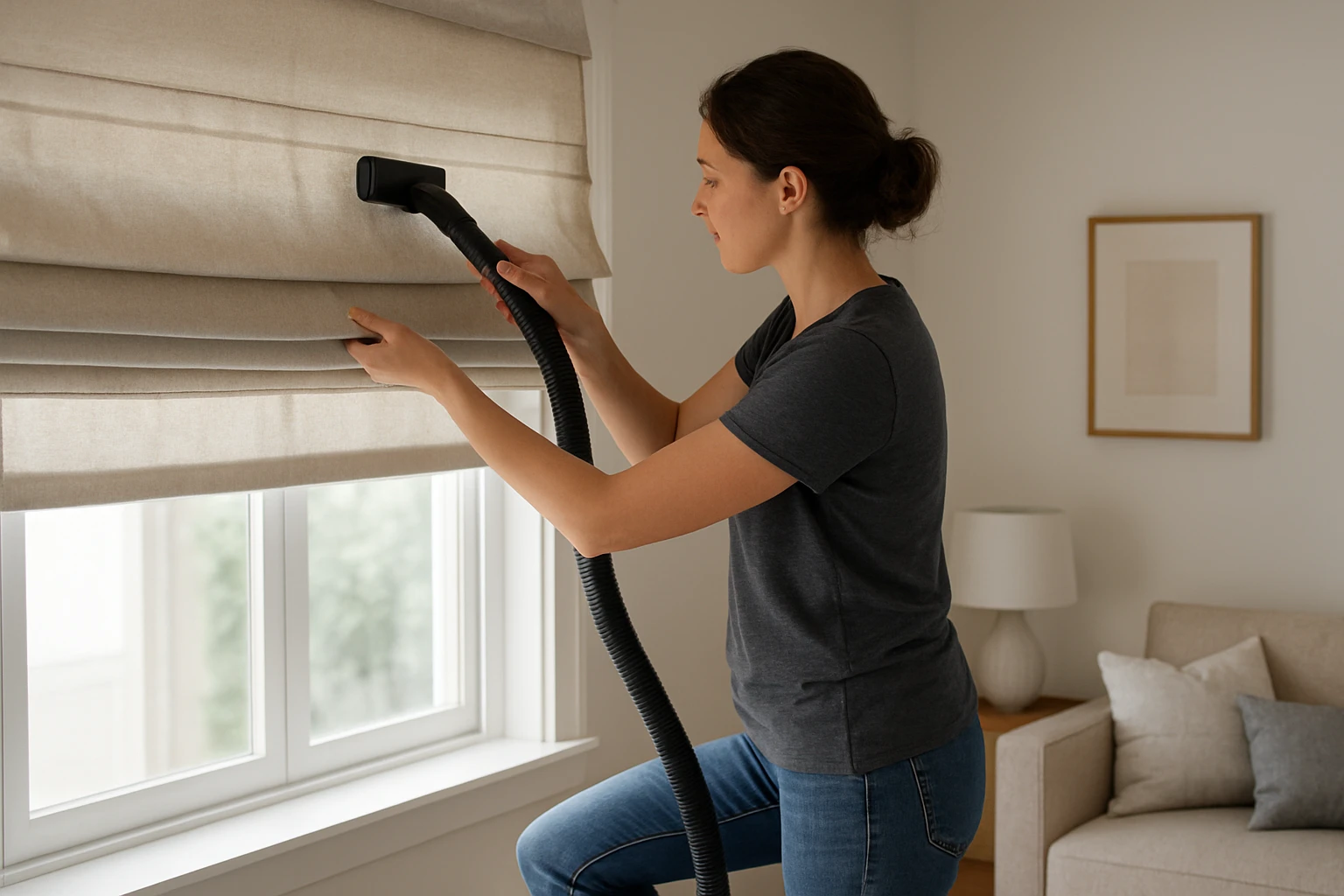
Dry Dusting:
Lower the shade to open the folds. Use a soft brush or a microfiber cloth to remove loose dust. If the shade is high or heavy, unhook it and lay it flat on a clean surface to dust both sides.
Vacuuming:
Attach a brush to the vacuum and use low suction. Move with the grain of the fabric and follow the fold lines. Spend two to five minutes per shade for light dust and up to ten minutes for heavy build-up.
Spot Cleaning Stains:
What to Test First:
Always test a small hidden patch. If the test shows no color loss and no shrinkage, you can spot clean the visible stain.
Spot Clean Method:
- Mix a small amount of mild detergent in cool water.
- Blot the stain with a damp white cloth. Do not rub.
- Work from the outside toward the stain center to avoid spreading it.
- Rinse the area by blotting with a cloth dampened with cool water only.
- Press dry with a clean towel and let the shade air dry while lowered until fully dry.
A common mistake is using too much water. Overwetting can weaken glue used in linings or cause puckering along the folds.
Deep Cleaning by Hand Wash:
If the care label allows hand wash, remove the hardware and lay the shade flat on a large clean surface. Fill a tub with cool water and a small amount of mild detergent. Submerge the fabric and move it gently by hand for a few minutes. Do not wring. Lift and drain, then press water out by rolling the shade in a clean towel. Reshape the folds while damp and hang to dry fully before rehanging.
Machine Washing:
Most fabric Roman shades are not made for repeated machine washing. Only machine wash when the care label gives clear permission and the shade is small and simple. Use a gentle cycle, cold water, a laundry bag if possible, and lay flat to dry instead of tumble drying.
For cleaning guides on other blind types see How To Clean Roller Blinds? | Marvelous Step By Step Guide and The Ultimate Guide on How to Clean Vertical Blinds.
Machine Washing and Drying Risks and Tips
Machine washing can save time but it carries risk. Even on a gentle cycle, seams can pull and lining glue can soften. If you choose to machine wash, follow these precautions.
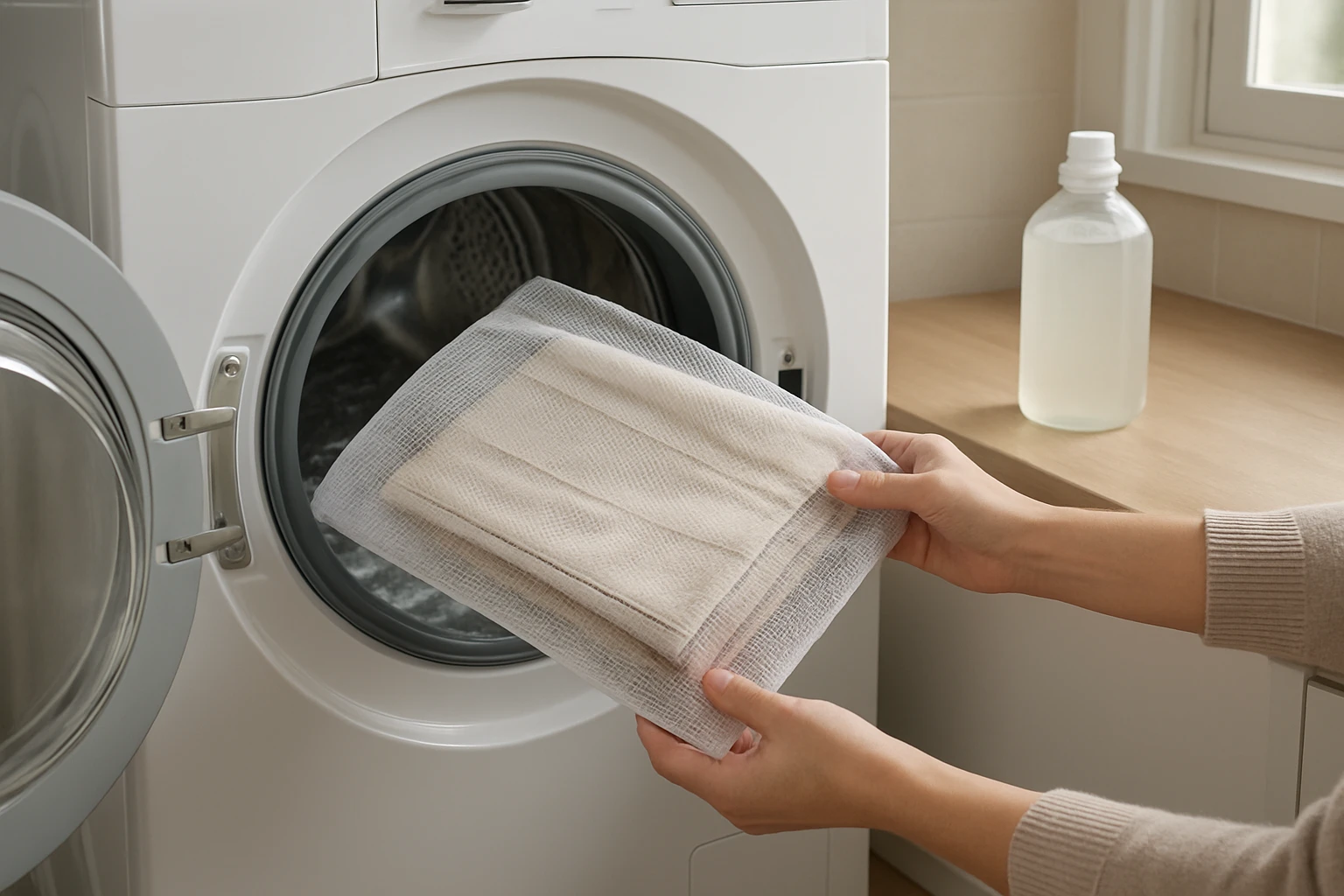
Machine Wash Tips:
- Use cold water and a delicate cycle.
- Put the shade inside a large laundry bag or pillowcase to limit agitation.
- Use very mild detergent and no fabric softener.
- Skip spin cycles if possible and press water out gently by hand before drying.
Drying Tips:
Air drying is the safest option. Lay the shade flat on a clean towel to keep the folds aligned. If you hang it while damp, support the top rail and the bottom hem so the weight of water does not distort the folds. Never use high heat in a dryer. Heat can cause shrinkage and soften linings.
Common Problems and How to Fix Them
Below is a quick reference table to help you choose the right cleaning method for common issues.
| Problem | Best Method | Time Estimate | Risk To Fabric |
|---|---|---|---|
| Light dust and pollen | Dry dust and vacuum | 5 to 10 minutes | Very low |
| Small food or grease stain | Spot clean with mild detergent | 10 to 20 minutes | Low if tested first |
| Heavy oil stain | Professional cleaning recommended | Varies | Medium to high |
| Mildew smell | Spot treat with diluted vinegar then air dry | 30 to 60 minutes | Low if rinsed well |
| Whole shade yellowing | Professional textile cleaning | Several hours to days | Low if handled by pros |
A practical note from hands-on work: stains left longer than two weeks are about three times harder to remove with spot cleaning alone, and many then need professional solvent cleaning to avoid damage.
Care and Prevention
Keeping shades clean is easier than restoring them. A few simple habits prevent most problems.
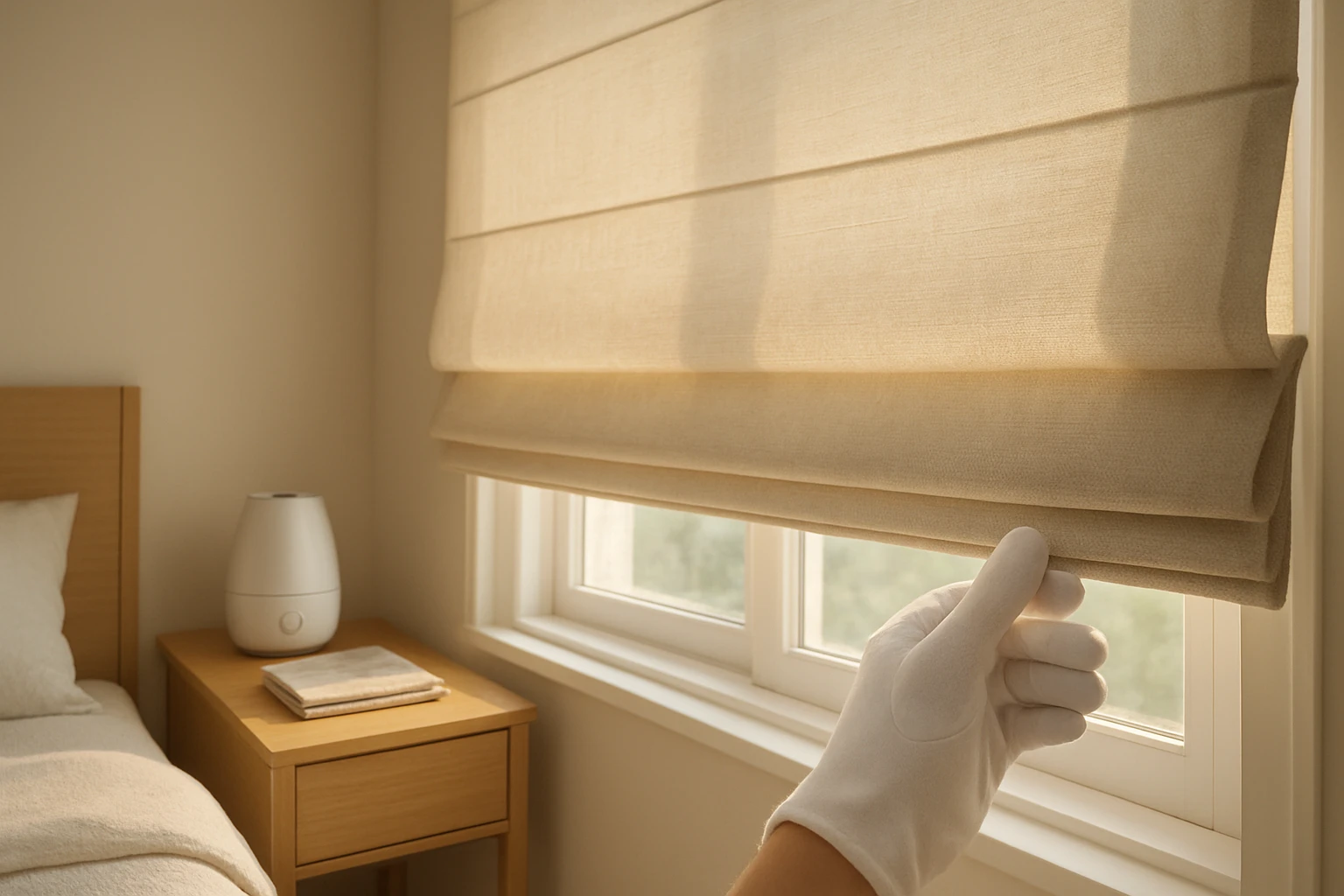
- Dust weekly with a soft brush.
- Avoid touching shades with oily hands. Use the handle or the bottom rail.
- Keep shades away from direct cooking splatter or high humidity unless they have washable fabric.
- Use a lightweight lining or a protector in high-sun areas to reduce fading.
If you are choosing new shades, read Choosing The Right Style Of Roman Blinds | 6 Important Tips and pick fabrics that are easier to clean. Linen and cotton look great but need gentler care, while synthetic blends can handle more regular washing.
When to Call a Professional
Call a professional when stains cover a large area, when the lining is glued and may delaminate, or when you see fabric weakening near seams. Also call a pro if you are unsure how the shade is built or if it has delicate trims.
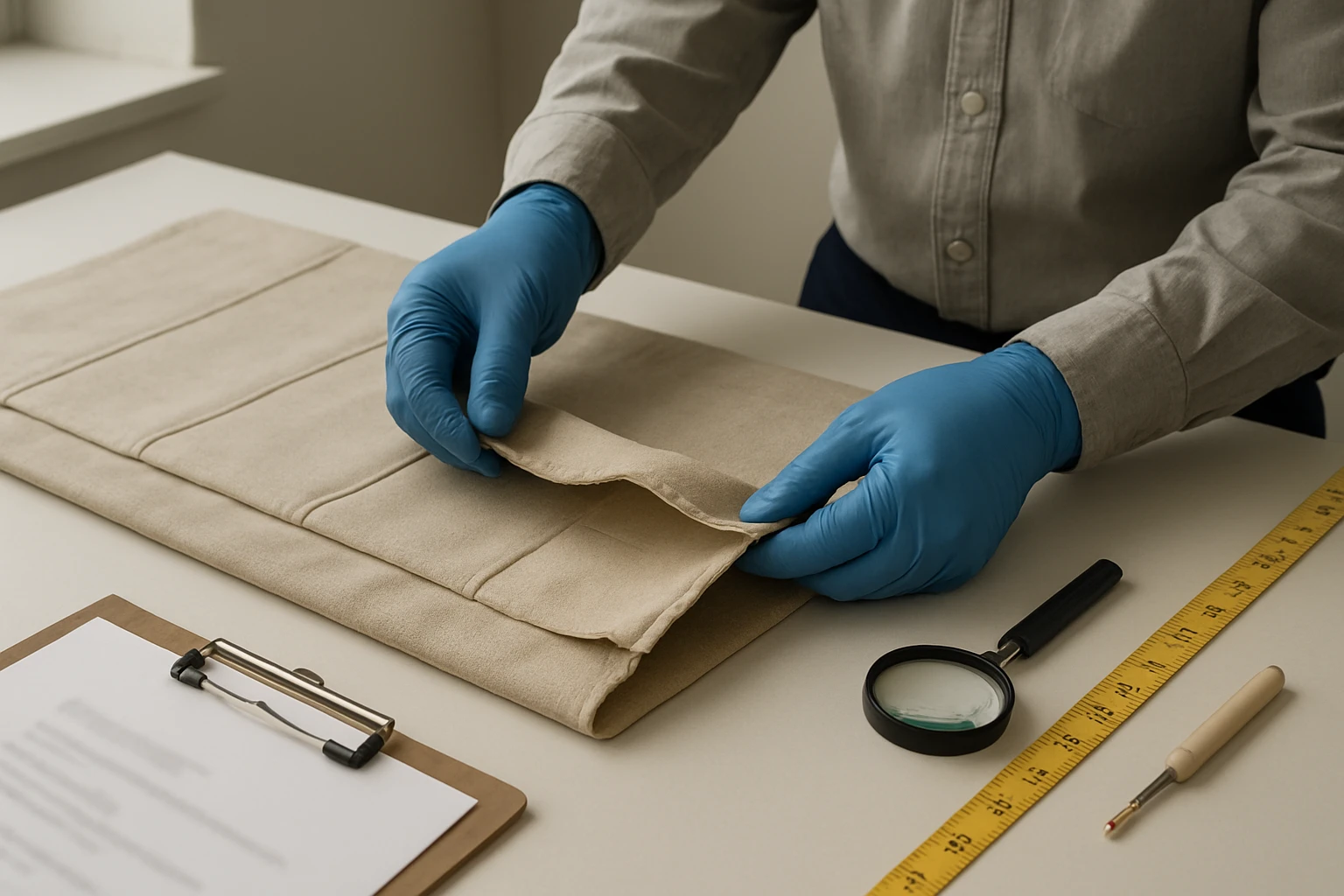
If you want to know more about the company and services, check the team page at About Us. A good cleaner can often restore a shade that seems beyond help and will protect the stitching and lining while using solvent or wet cleaning methods a homeowner should avoid.
Final Practical Checklist
- Test a hidden area first for colorfastness and shrinkage.
- Start with dry dusting and vacuuming before wet cleaning.
- Use cool water and pH-neutral detergent for any wet work.
- Avoid machine wash unless the care label allows and the shade is small.
- Air dry and reshape folds before rehanging.
- Call a professional for large stains, delaminated linings, or old severe discoloration.
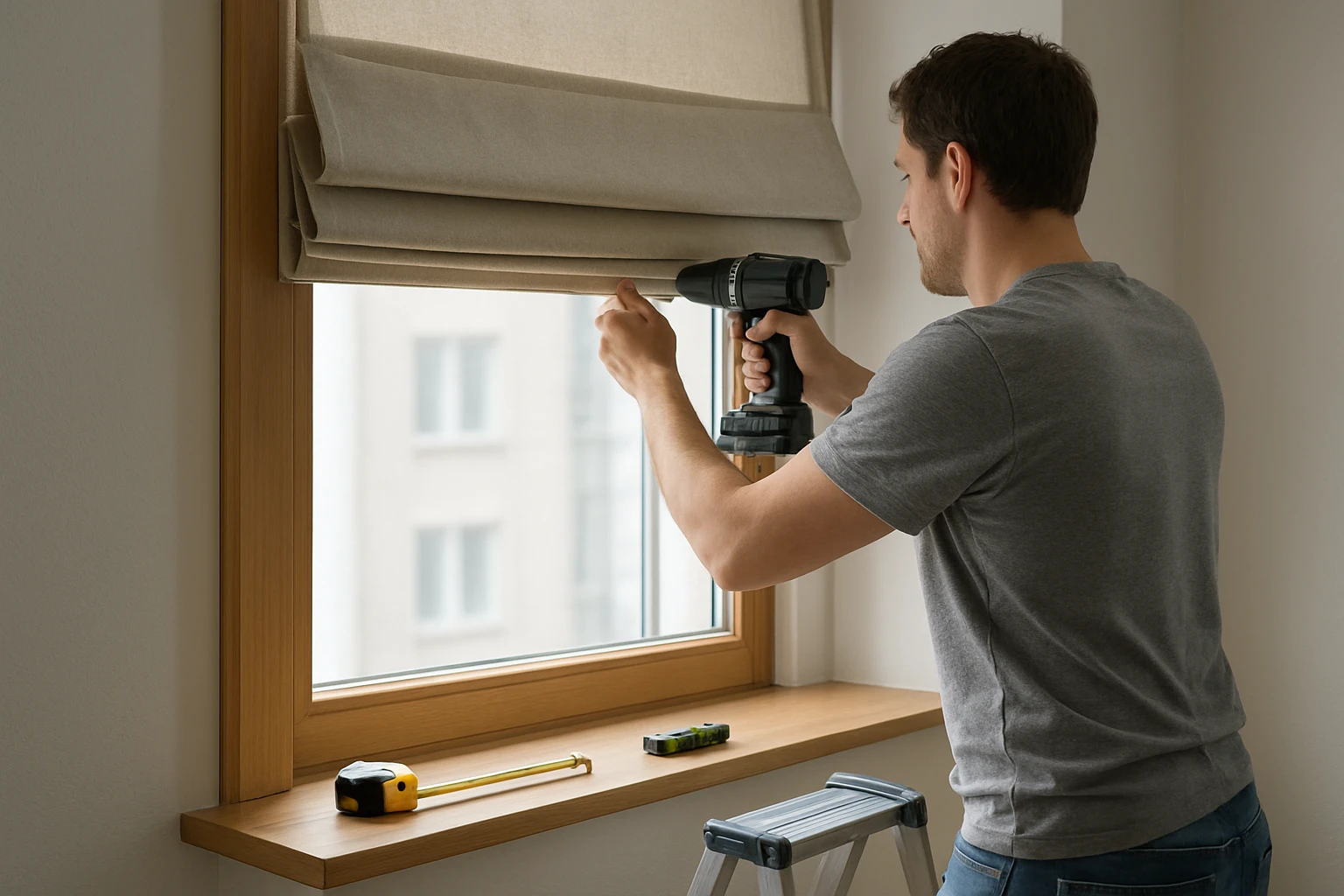
Following these steps keeps fabric Roman shades clean and preserves their look for years. If a repair or refit is needed after cleaning, see the Step-by-Step Guide To Roman Blinds Fittings Guide for installation tips and measurements.
Frequently Asked Questions
Can I Machine Wash All Fabric Roman Shades?
No. Only machine wash shades if the care label explicitly permits it. Many shades have glued linings or trims that can separate in a washing machine. If you must machine wash, use a delicate cycle, cold water, a large laundry bag and air dry gently.
How Do I Remove Grease or Cooking Stains from a Roman Shade?
First test a hidden area for colorfastness. Blot excess grease, then apply a small amount of diluted mild detergent to the stain and blot gently from the outside in. Rinse by blotting with cool water and press dry with a towel. Heavy grease may need professional solvent cleaning.
Will Roman Shades Shrink If I Hand Wash Them?
They can shrink if the fabric or lining is not pre-shrunk. Always test a hidden patch and use cool water with gentle handling. Press water out with towels rather than wringing and reshape folds while the shade is damp to reduce visible shrinkage.
How Often Should I Vacuum My Roman Shades?
Light vacuuming every one to two weeks works well to keep dust from building up. For rooms with pets, heavy foot traffic or cooking, vacuum every two to four weeks and consider a deeper clean every six months.
What Should I Do If the Lining Separates After Cleaning?
If the lining is separating, stop wet cleaning and consult a professional cleaner or repair service. Delaminated linings often need specialist re-gluing or replacement, and attempting a household repair can make the problem worse.