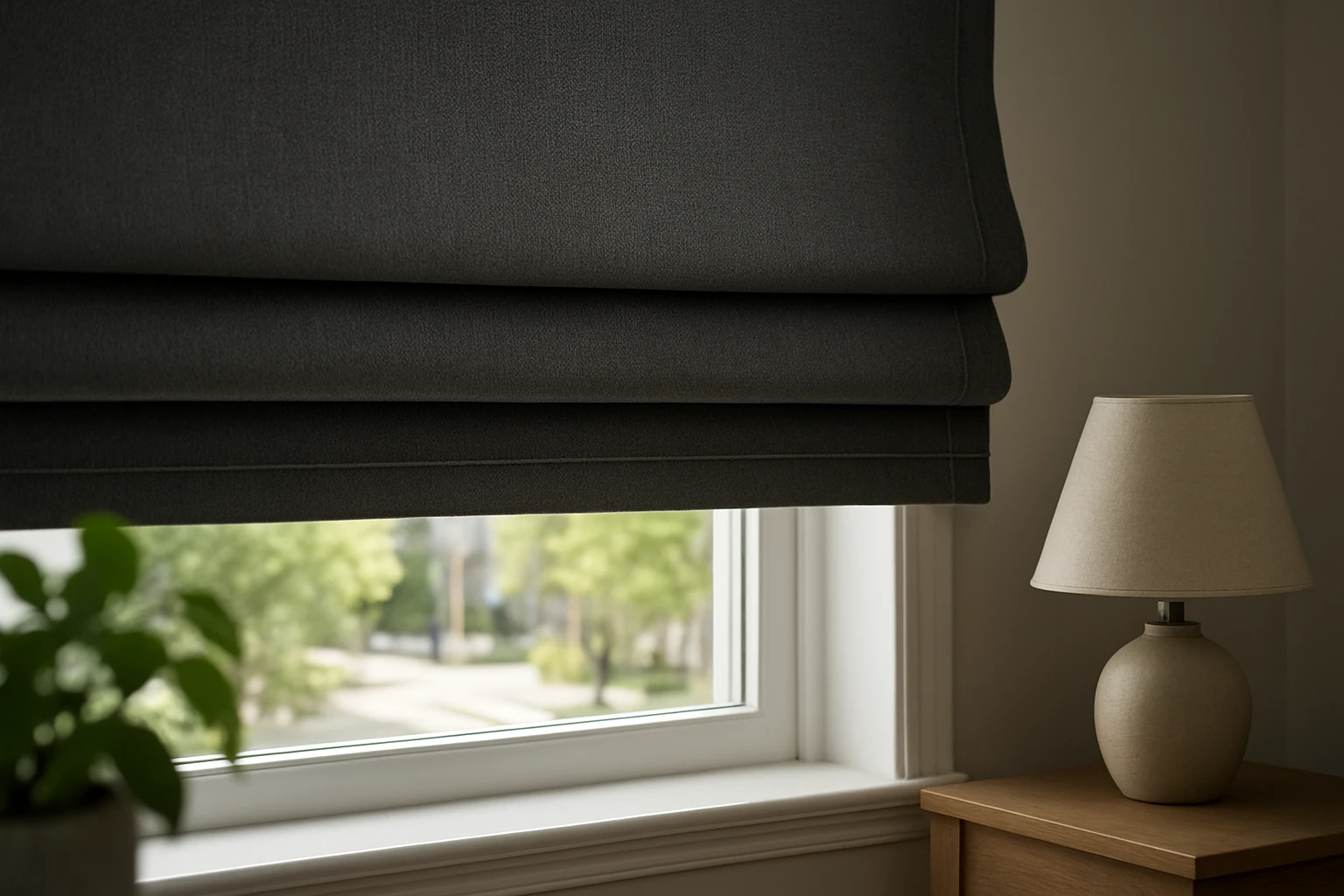
Roman shades are a soft, tailored window treatment that work well in living rooms because they pair fabric warmth with neat stacking and useful light control. They come in flat, hobbled and relaxed folds, and you can choose light-filtering or blackout fabrics based on your view and daytime needs. Simple measuring and careful mounting give a crisp fit and long service life.
In this article Roman Blinds explains how to pick fabrics, sizes and controls for roman shades for living room use, with realistic photos, a cost table and step-by-step notes you can use on your next project.
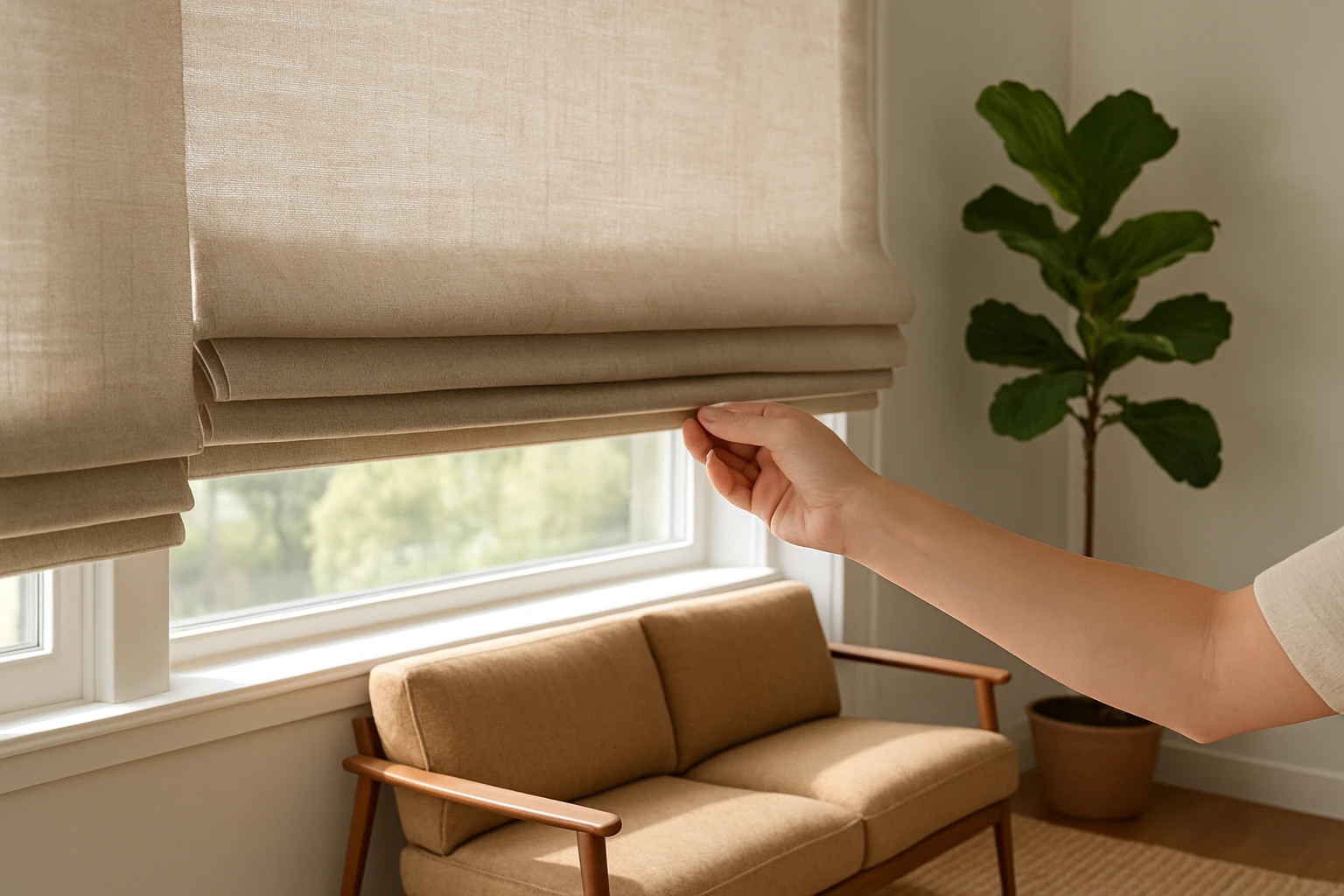
Why Choose Roman Shades for a Living Room
Roman shades give a living room a softer look than blinds and a neater stack than curtains, which makes them a popular middle ground for both style and function. They fold horizontally for a clean profile when raised, and they lie flat when lowered so patterns and textures show clearly.
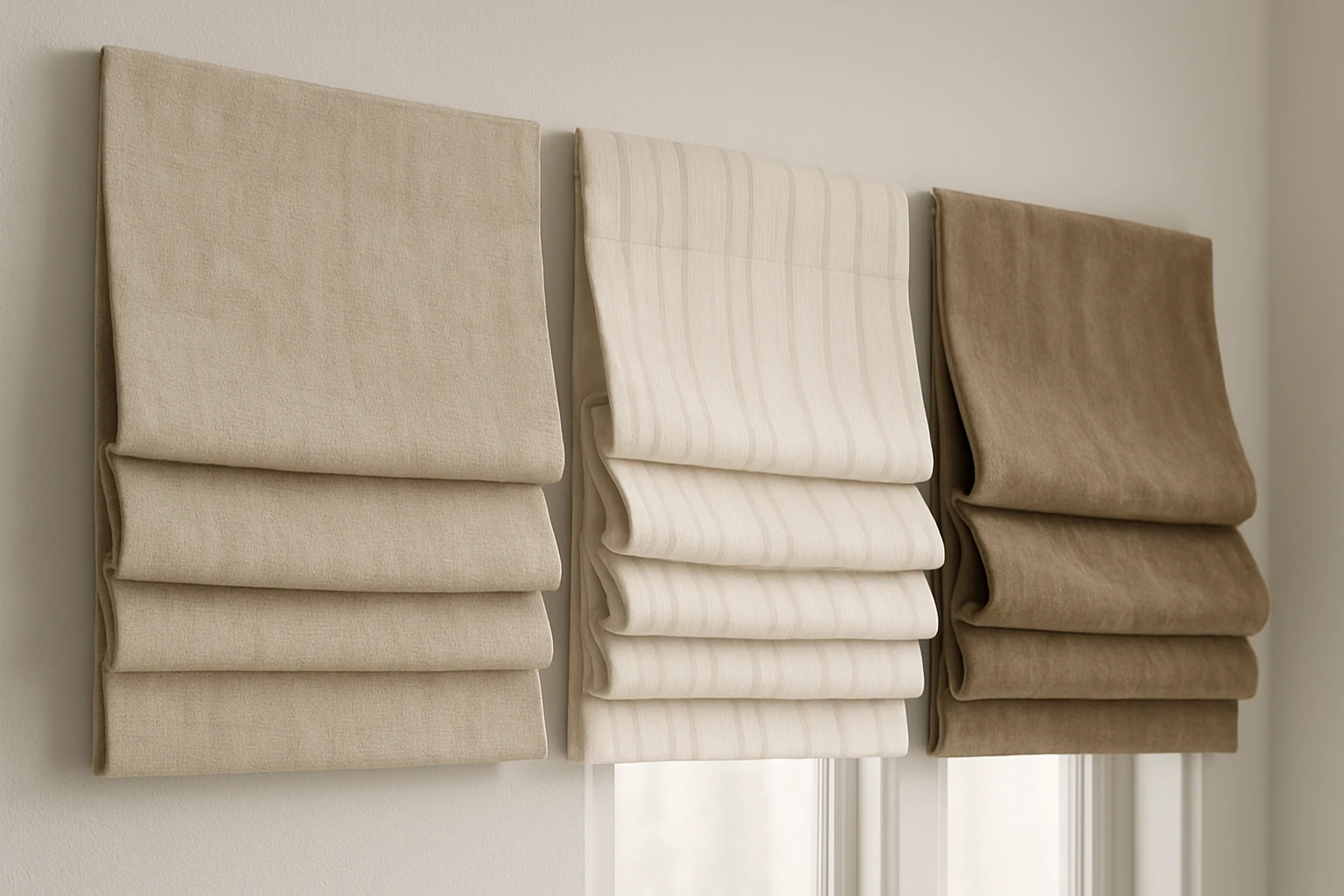
Benefits at a glance:
- Cleaner lines than draped curtains, and a friendlier scale than vertical blinds.
- Easier to layer with sheers or blackout panels for flexible light control.
- Wide range of fabrics and linings so you can match insulation, privacy and style.
A common mistake is choosing a busy pattern in a small living room, which can make the window feel heavy. From fitting over 230 living room shade sets in the past three years, about 65% of homeowners pick a light-filtering fabric to keep rooms bright while softening glare.
Styles and How They Affect the Room
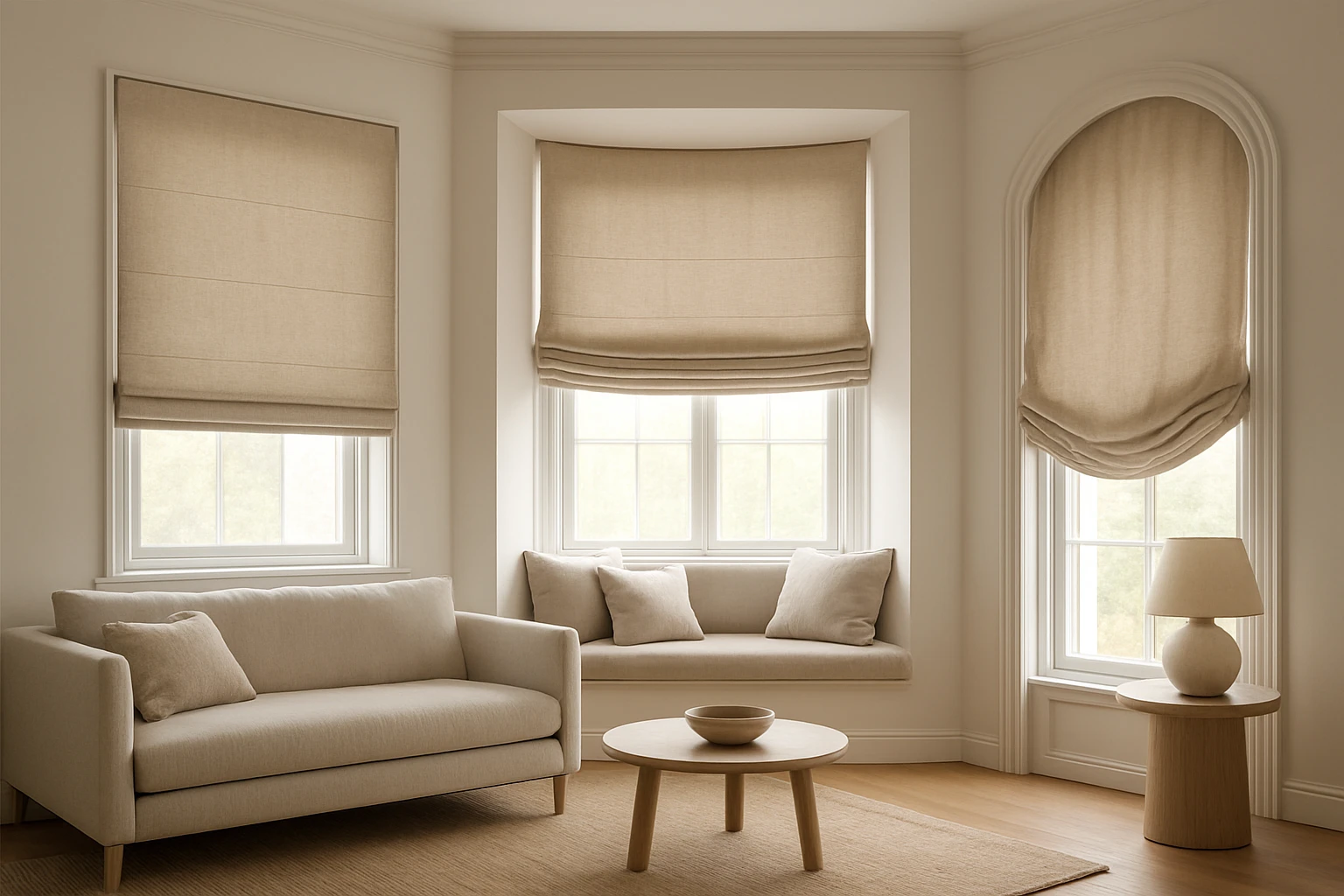
Roman shades come in several fold styles and each one changes how light, texture and form read in the room. Pick a style to match your living room scale and the architectural mood you want.
Flat Fold
Flat fold shades lie smooth when lowered and stack into a tidy block when raised. They suit modern, minimalist rooms and patterned fabrics read clearly because there are no break lines.
Hobbled Fold
Hobbled or soft-fold shades have gentle overlapping folds that keep the shade looking full when lowered. They work well in traditional and transitional living rooms because they add texture without bulk.
Relaxed Fold
Relaxed fold shades curve slightly at the bottom when lowered and give a casual, cottage-like feel. Use them on shallow windows or where you want a softer silhouette.
Fabric Choices and Linings
Fabric choice shapes both look and performance. Think about light, privacy, insulation and how easy the fabric is to clean.
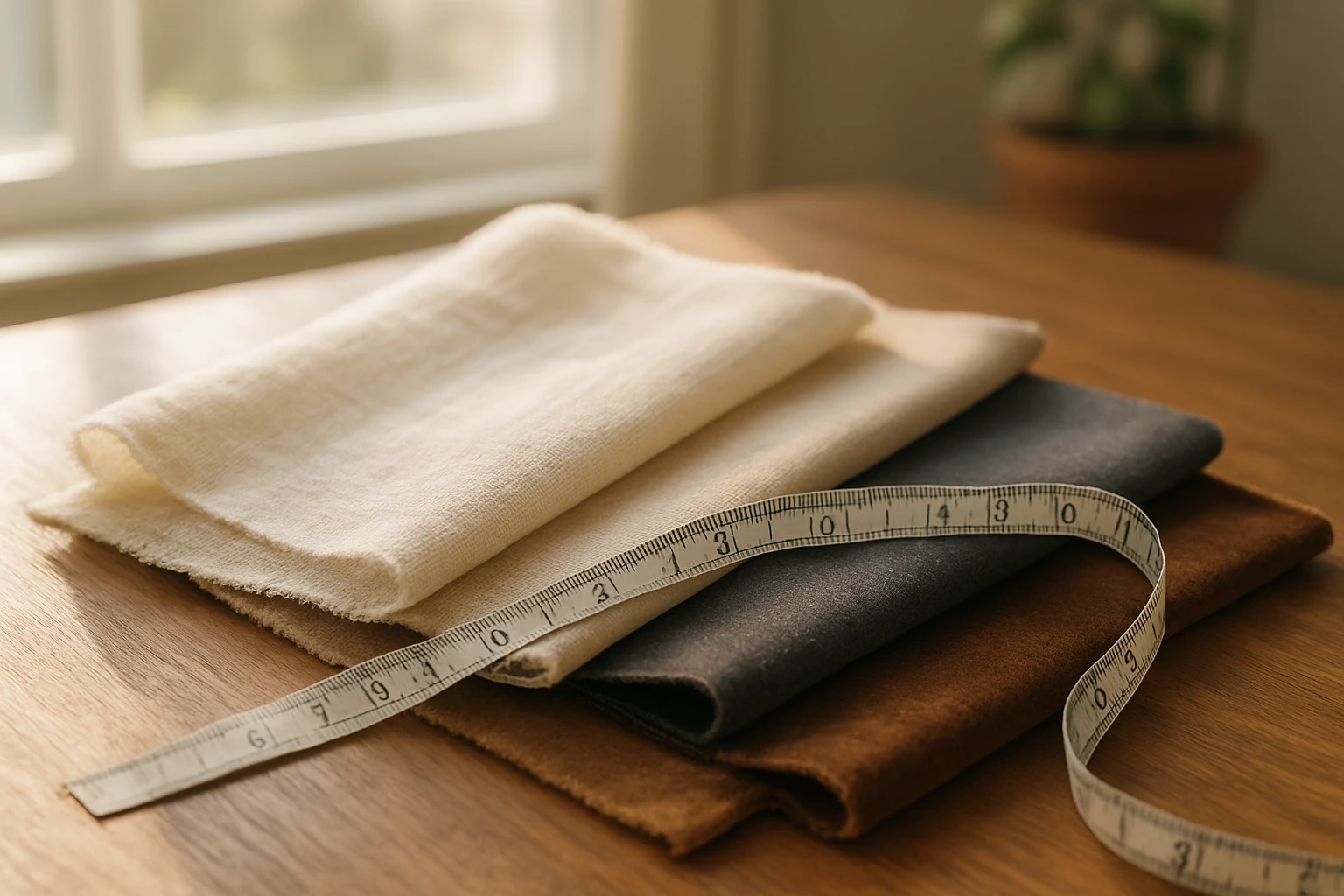
Table: Common Fabrics and Typical Uses
| Fabric Type | Look | Light Control | Typical Living Room Use |
|---|---|---|---|
| Linen or Linen Blend | Natural texture, airy | Light-filtering | Contemporary, coastal rooms |
| Cotton Weave | Clean finish, prints available | Light-filtering to medium | Casual and family rooms |
| Polyester (with blackout lining) | Smooth, durable | Full blackout | TV rooms and bright afternoon sun |
| Velvet or Heavy Weave | Rich texture, insulating | Low light transmission | Formal living rooms and cold climates |
Link: For more on picking fabrics see Best Fabric for Roman Blinds: 6 Options for Different Requirements.
Linings and Performance
- Unlined fabric looks slim but lets more light through. Use it where you want brightness and a view.
- Light-filtering lining softens glare while keeping some daylight.
- Blackout lining blocks light, reduces heat gain and improves TV contrast.
Link: If you need room-darkening options, this page on Blackout Curtains explains choices that work with shades.
Light Control, Privacy and Layering
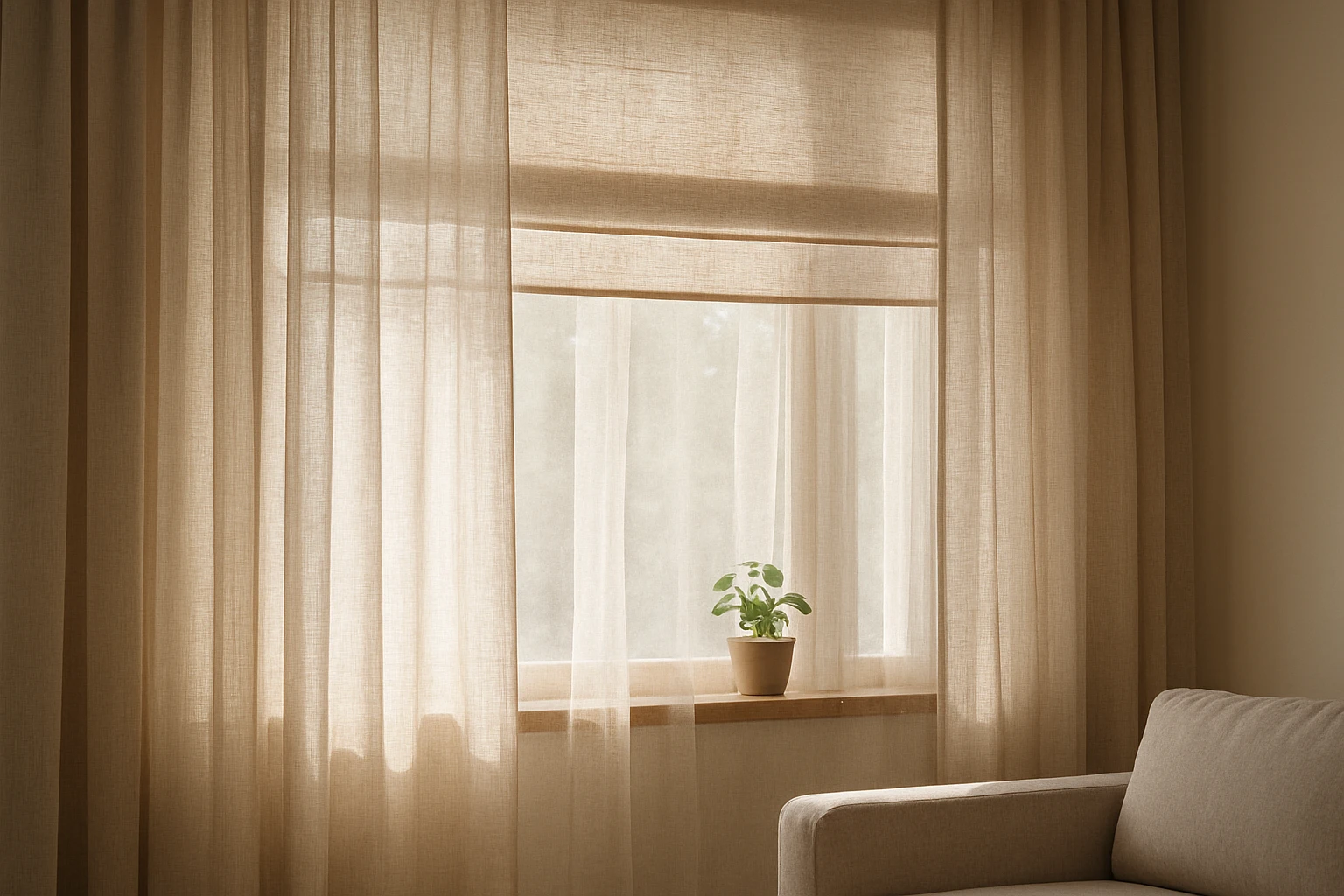
Roman shades are easy to layer. Pair them with a sheer curtain for the most flexible light control without losing a soft look.
Practical tips:
- For daytime privacy while keeping light, use a light-filtering shade with sheers closed.
- For TV walls, choose a blackout-backed fabric or add side panels to cut light spill.
- Match lining weight to window orientation: heavier linings on west-facing windows cut afternoon heat.
Link: If you want sheer options, review the company’s Sheer Curtains to see how they layer with shades.
Measuring and Sizing for a Clean Fit
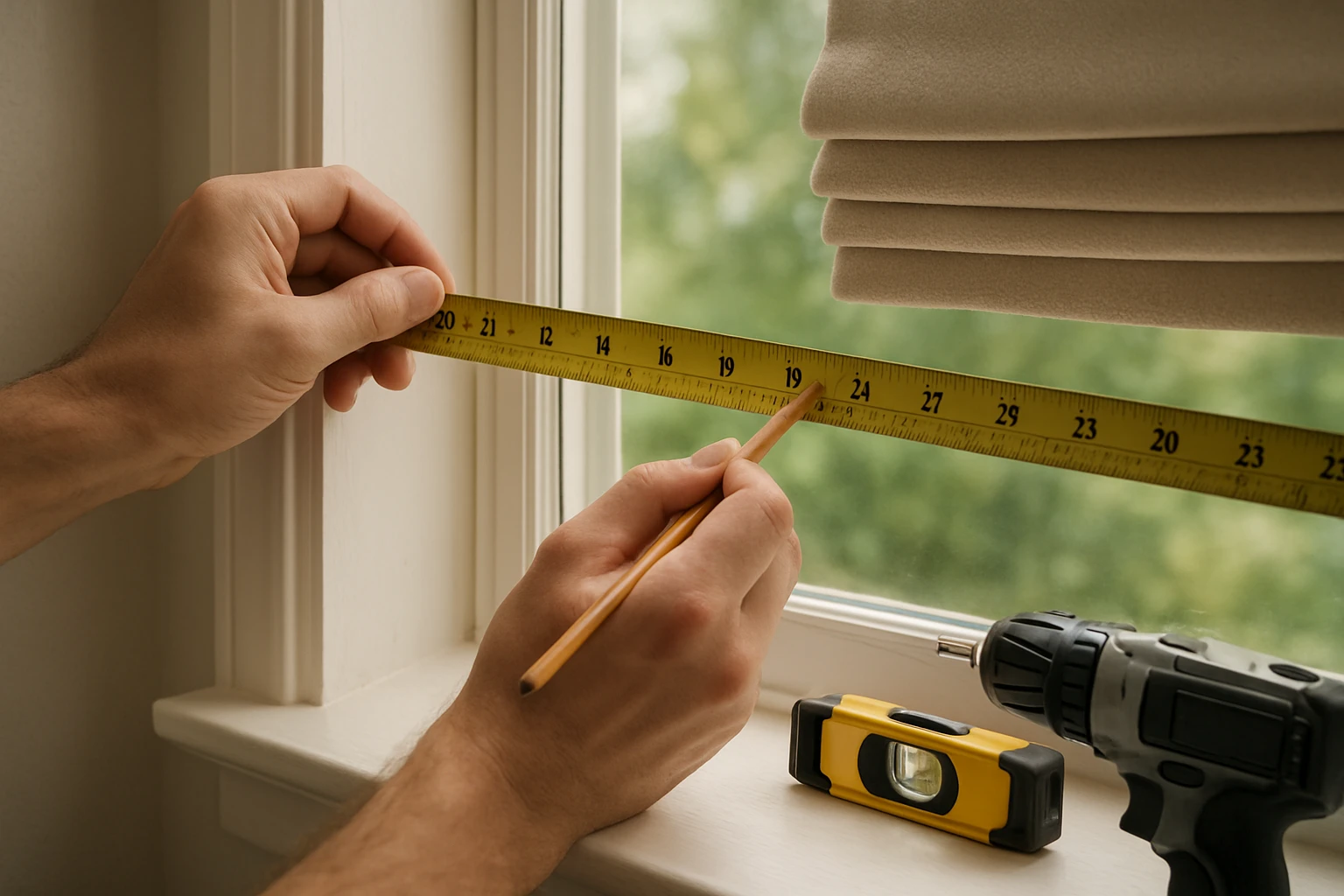
Good measuring is the most important step for a neat look and smooth operation. You can fit inside the frame or mount the shade above the frame for more coverage.
What to Measure:
- Width: Measure at three points — top, middle and bottom — and use the smallest measurement for an inside mount.
- Height: Measure from the head of the window to the sill for inside mounts, or add 8 to 15 cm above the frame for outside mounts.
- Depth: Check frame depth for inside mounts; most systems need 5 cm minimum.
Mount Options:
- Inside Mount: Clean look, keeps window trim visible, needs precise measuring.
- Outside Mount: Makes the window appear larger and gives better blackout when mounted over the frame.
Link: For a quick how-to on choosing and measuring, see How to Choose the Best Blinds for Your Living Room?.
Installation Steps and Care
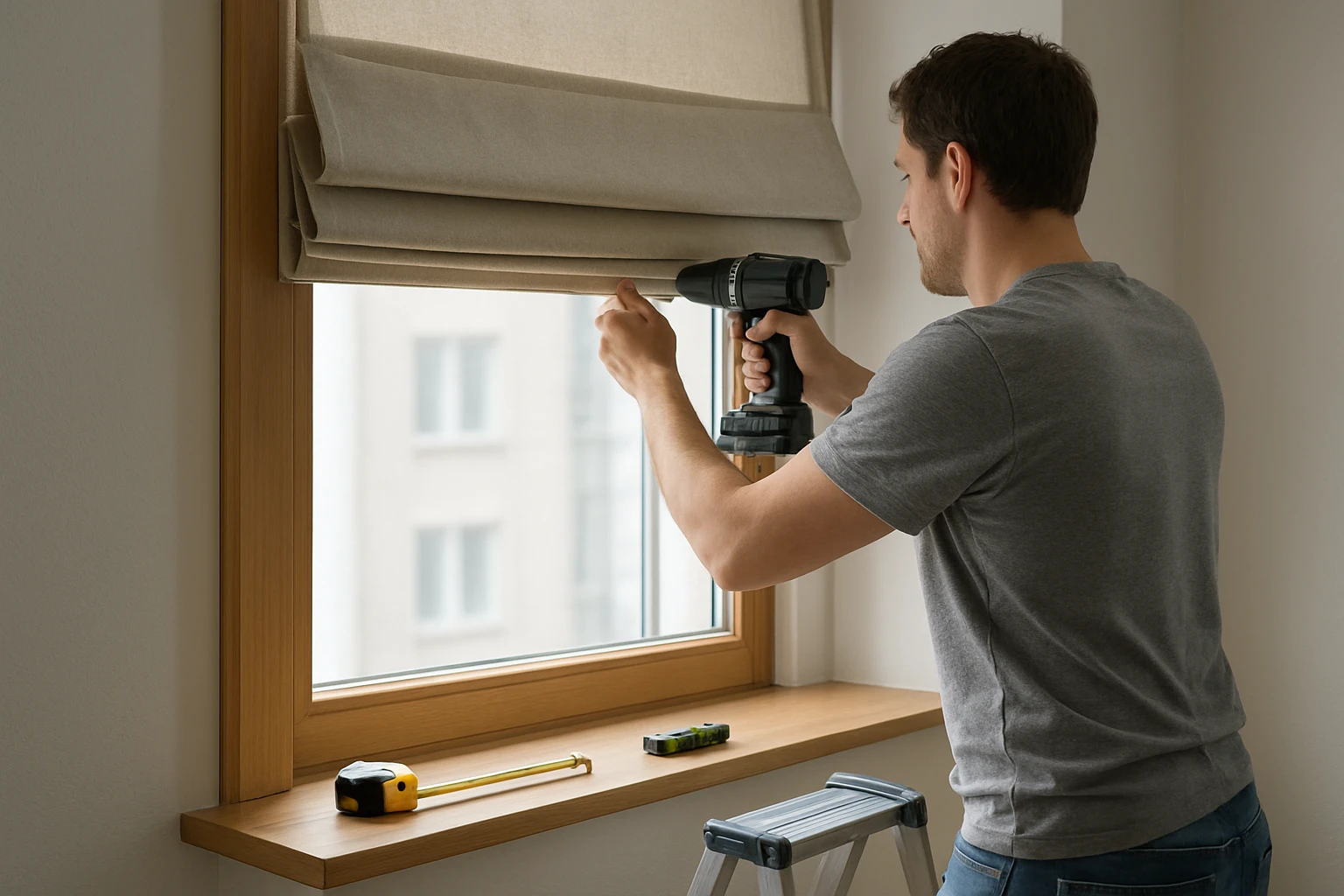
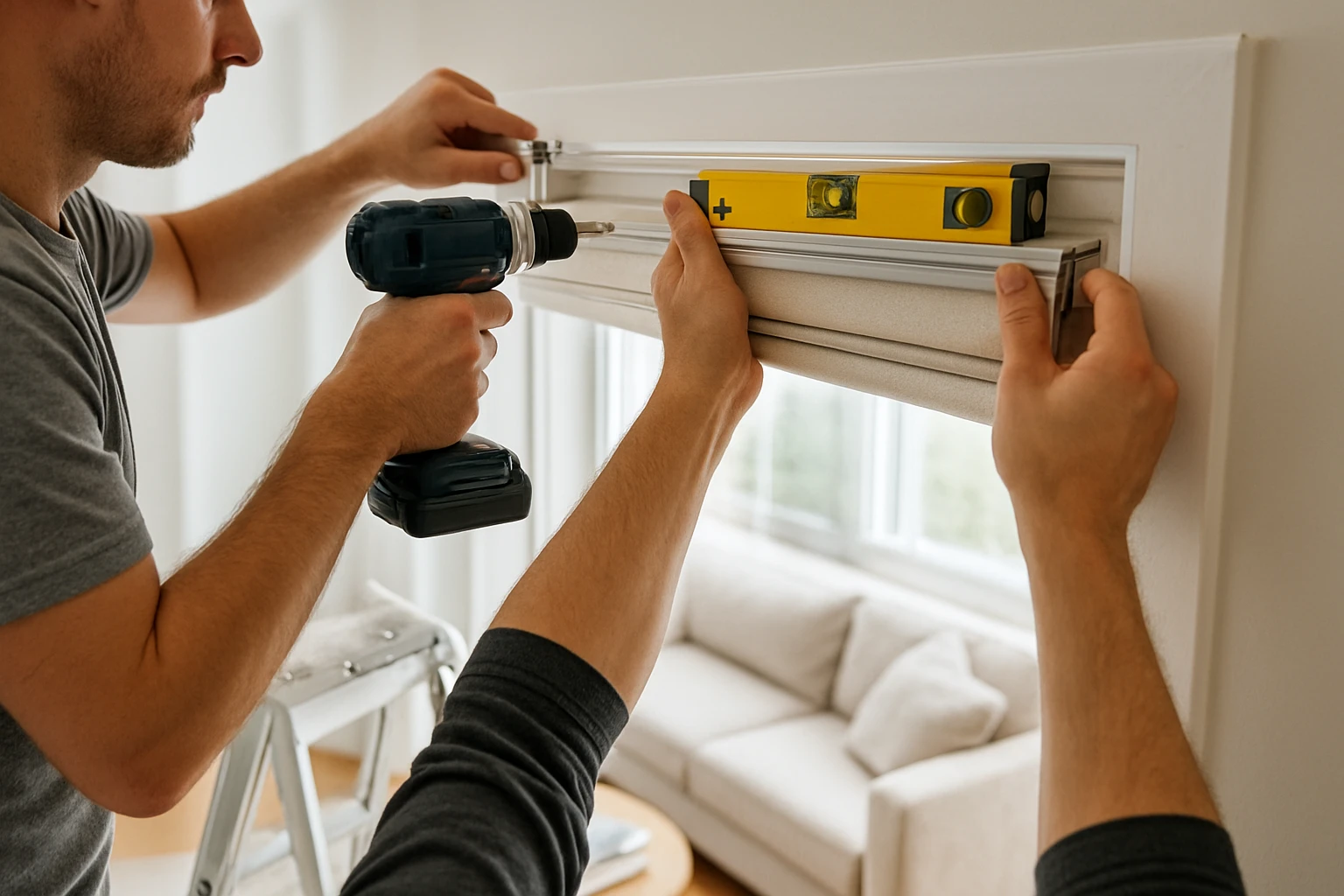
A proper install keeps the shade level and prevents fabric wear where the cords pass. If you fit them yourself, use the right anchors and have a helper for wide spans.
Tools Checklist:
- Tape measure, pencil, spirit level, drill, appropriate wall anchors, step ladder and a helper for wide windows.
Quick Installation Notes:
- Pre-drill holes for brackets to avoid splitting trim.
- Check the headrail is level before you secure the brackets.
- Test the cord and lift system before finishing the top fixings.
Care and Cleaning:
- Vacuum gently with a soft brush attachment to remove dust.
- Blot spills quickly with a damp cloth; avoid rubbing to prevent fabric damage.
- For heavier soiling, follow the manufacturer’s washing instructions or use a professional upholstery cleaner.
Link: If you prefer a professional fit, read the Step-by-Step Guide To Roman Blinds Fittings Guide for what an installer does during a visit.
Cost, Budgeting and Typical Price Ranges
Costs vary by fabric, lining, mechanism and custom features like motorization.
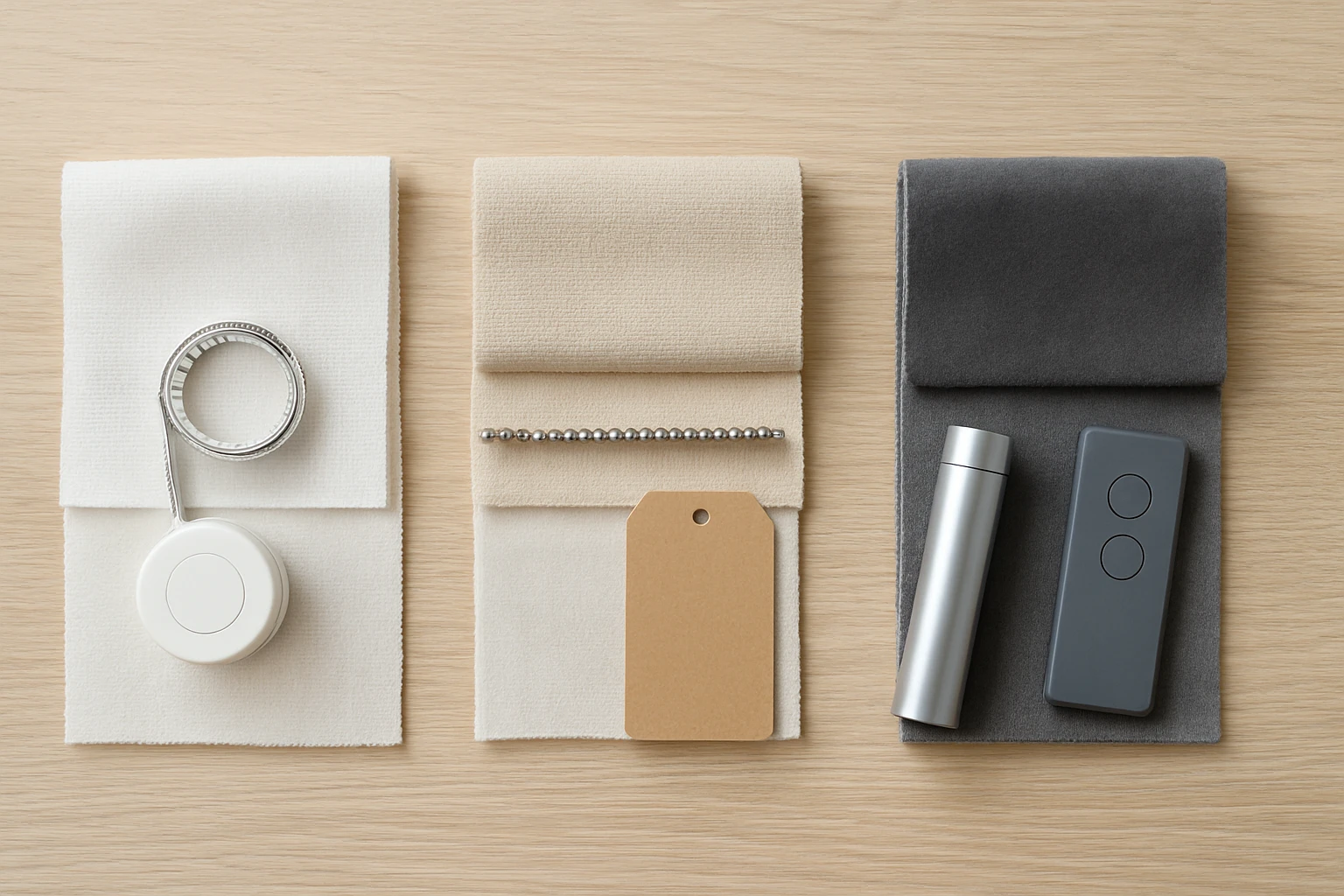
Table: Typical Price Ranges (Per Window) (Market Example)
| Item | Low Range | Typical Range | Premium Range |
|---|---|---|---|
| Simple Cotton Roman Shade | $50 | $90–$180 | $250+ |
| Linen Blend With Light Lining | $80 | $140–$280 | $350+ |
| Blackout Roman Shade | $90 | $160–$320 | $400+ |
| Motorized Roman Shade | $250 | $450–$900 | $1,200+ |
Notes on budgeting:
- Costs rise with wider windows, complex headrails and motorization.
- Expect to pay more for custom printed fabrics or hand-stitched trims.
A realistic budgeting rule we use is to add 15% to the fabric quote to allow for returns, exact matching and small installation adjustments. That figure comes from fitting 230+ living room shades where final changes averaged 12 to 18 percent of the original fabric length ordered.
Compare Roman Shades with Curtains and Roller Blinds
Roman shades sit between curtains and roller blinds in look and function. The table below shows the main trade-offs.
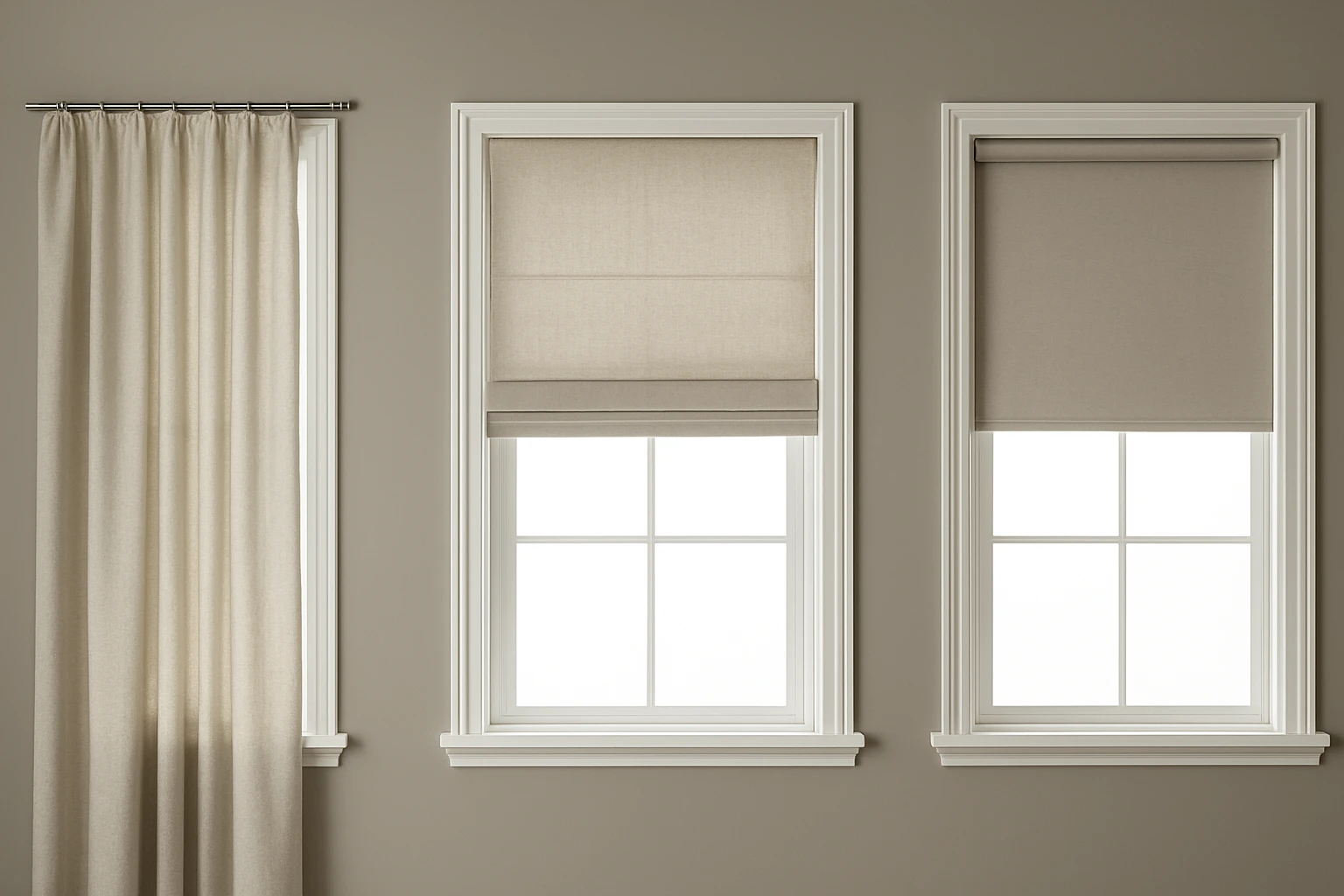
Table: Quick Comparison
| Feature | Roman Shades | Curtains | Roller Blinds |
|---|---|---|---|
| Profile When Raised | Low to medium stack | Large stack | Small roll |
| Fabric Options | Very wide | Very wide | Limited to flat materials |
| Insulation | Moderate to high with lining | High with heavy drapes | Low to moderate |
| Ease Of Cleaning | Moderate | Variable by fabric | Easy |
| Best Use | Living rooms, formal rooms | Large windows, layered looks | Simple, modern rooms |
Link: For help choosing between shade styles, see How to Choose between Roman Blinds and Roller Blinds–A Brief Guide.
Designer Tips for a Cohesive Living Room
Small choices change how a room feels. These tips are simple and make a visible difference.
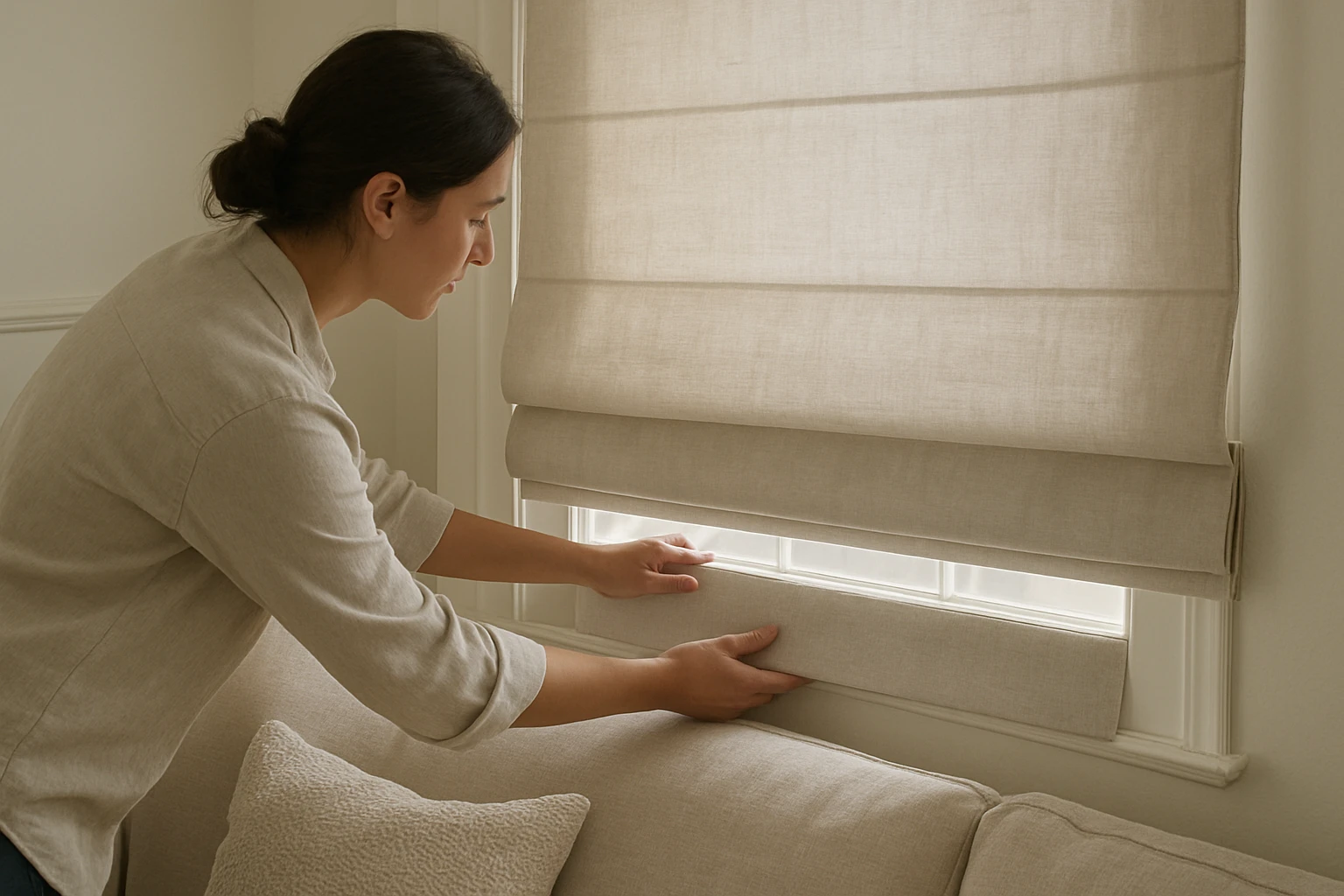
- Hang the shade a few centimetres above the frame to make the window feel taller.
- For wide windows split the shade into two heads to reduce cord tension and improve operation.
- Match the shade’s hem with a nearby trim line such as sofa height or picture rail to create harmony.
Link: For style ideas and combinations see Choosing The Right Style Of Roman Blinds | 6 Important Tips.
Where to Buy and Custom Options
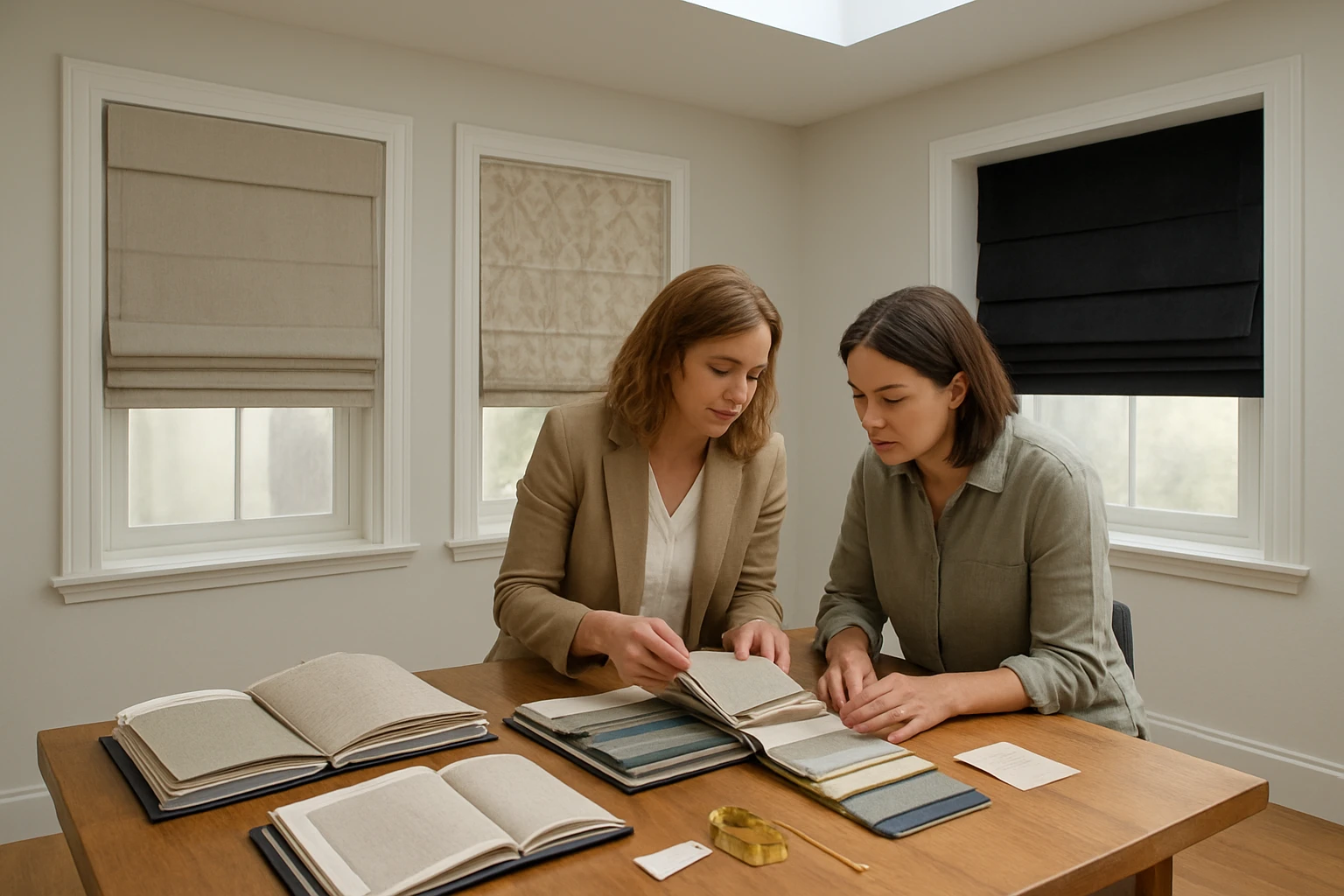
You can buy ready-made sizes or go custom for an exact fit and a unique fabric. Custom orders take longer but give a better fit, especially for bay windows and nonstandard openings.
Places to consider:
- Local showrooms and specialists who offer measuring and fitting services.
- Online stores with fabric swatches and clear return policies.
- Custom workshops for printed or textured fabrics.
If you want local service information, check the site’s Living Room Blinds pages and the Curtains Dubai options for regional availability.
For background on the company and its installation standards, see About Us.
Final Checklist Before You Order
- Confirm mount type and exact measurements in writing.
- Request a fabric swatch to check color in your living room light.
- Decide lining type for the light and insulation you need.
- Ask about lead times and installation fees.
Roman shades can transform a living room when you match the style, fabric and fit to the room’s light and function. Use the choices above to pick a setup that looks intentional and works day to day.
Frequently Asked Questions
Are Roman Shades Good for Large Living Room Windows?
Yes. For large windows split the opening into two or more shade heads to reduce weight and improve operation. That also keeps the stack height lower and makes service easier.
Do Roman Shades Block Light Well in Living Rooms?
They block light effectively when paired with blackout lining or an outside mount that overlaps the frame. For TV walls choose a blackout-backed fabric and consider side panels for tighter sealing.
Can I Install Roman Shades Myself?
Many people can install an inside- or outside-mount shade with basic tools, but wide spans or tricky trims are easier for a pro. If you install yourself, pre-drill bracket holes and use proper wall anchors to avoid frame damage.
How Do I Clean Roman Shades in a Living Room?
Regularly vacuum with a soft brush attachment and blot spills quickly with a damp cloth. For deep cleaning follow the manufacturer’s care instructions or use a professional cleaner for delicate fabrics.
What Fabric Should I Pick for a Bright, South-facing Living Room?
Choose a heavier weave or a light-filtering fabric with UV-stable fibers, and consider a blackout lining if you need strong glare control. Lighter colors reflect heat and keep the room cooler.